Almost nothing you eat contains vitamin D2. The vitamin D in salmon, egg yolks, beef liver and fortified cow’s milk is D3, so the practical list of vitamin D2 foods comes down to mushrooms and a narrow set of fortified products that use UV-treated mushroom powder or irradiated yeast as their vitamin D source.
That matters if you avoid animal products, because standard D3 supplements are usually made from lanolin in sheep’s wool.
Mushrooms are the only whole food that carries D2
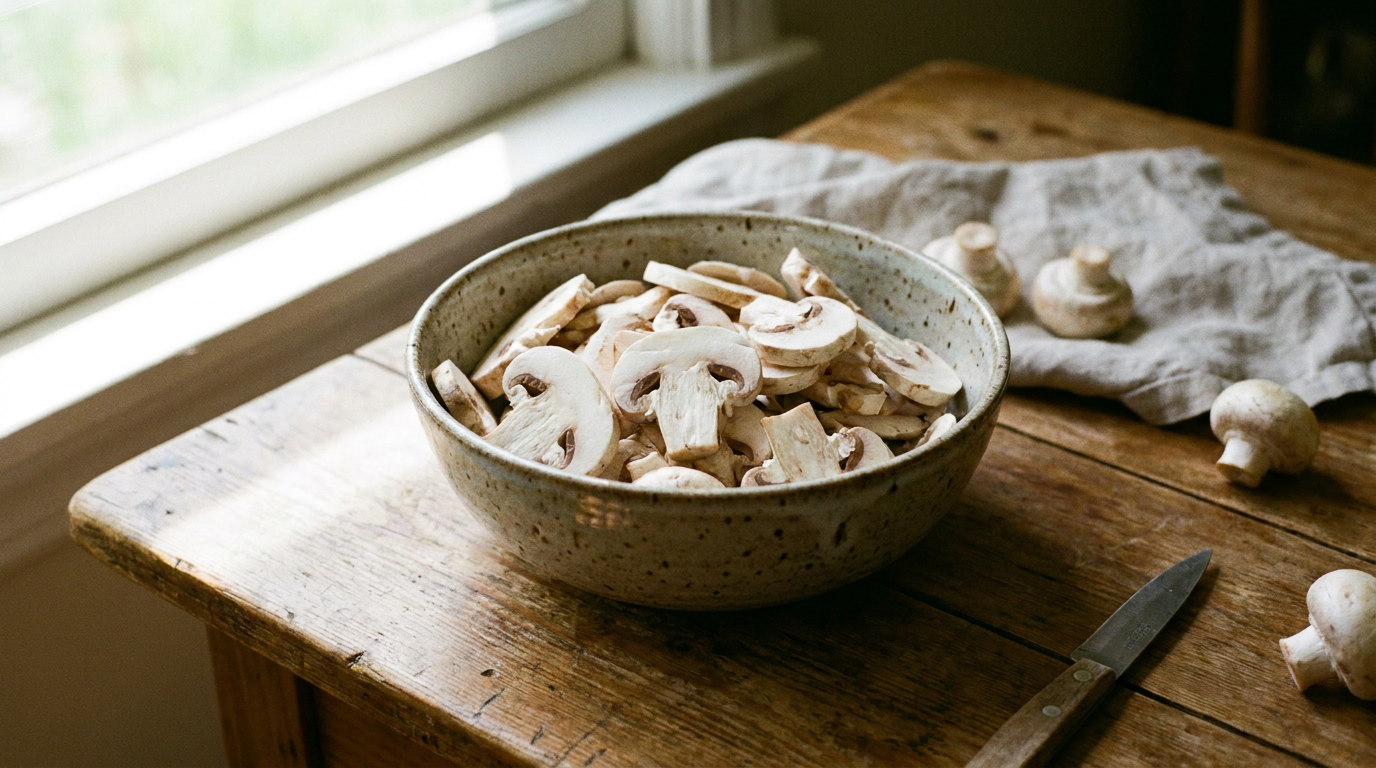
Mushrooms make ergosterol, and ultraviolet light converts it to vitamin D2. The catch is that most mushrooms grow in the dark, so untreated ones carry very little.
The National Institutes of Health Office of Dietary Supplements puts raw diced portabella at 0.1 mcg (4 IU) per half cup. White mushrooms that have been deliberately exposed to UV light come in at 9.2 mcg (366 IU) for the same half cup, which is 46 percent of the Daily Value.
That is roughly 90 times the difference between two mushrooms in the same produce aisle. Look for “UV-treated” or a vitamin D claim on the package, because you cannot tell by looking.
Fortified foods that use D2 instead of D3
In 2020 the FDA approved vitamin D2 mushroom powder as a direct food additive, codified at 21 CFR 172.382. The powder is made by exposing a slurry of Agaricus bisporus mushrooms to UV light, with the total dose capped at 12 joules per square centimeter.
The regulation also sets ceilings by food category. Breakfast cereals can carry up to 350 IU per 100 g, plant-based milk alternatives up to 84 IU per 100 g, yogurt alternatives up to 89 IU per 100 g, and fruit smoothies up to 100 IU per 240 mL.
Manufacturers using it have to print “vitamin D2 mushroom powder” in the ingredient statement, so the label tells you which form you bought. Supplement labels are far less generous about this, which is the same gap that makes shoppers guess between magnesium malate and citrate without any guidance on the shelf.
What food alone can realistically deliver
The adult RDA sits at 15 to 20 mcg, meaning 600 to 800 IU per day. One half cup of UV-treated white mushrooms covers a large chunk of that. A cup of fortified soy, almond or oat milk adds 2.5 to 3.6 mcg (100 to 144 IU), though many brands fortify with D3, so read before you assume.
There is one honest caveat. Research summarized by the NIH indicates D3 raises blood 25(OH)D further and holds it there longer than D2 does, which is worth knowing before you build a plan around D2 alone. The full comparison is in our breakdown of vitamin D2 versus D3.
The tolerable upper intake level for adults is 100 mcg (4,000 IU) daily, and mushrooms will not get you anywhere near it. If you are treating a diagnosed deficiency, that is a conversation for your doctor and a blood test, not a grocery list. The same skepticism applies to any supplement claim, which is why we checked what the trial data on phosphatidylserine shows.
Do mushrooms from the supermarket contain vitamin D2?
Some do, in small and variable amounts. Only those labeled as UV-treated carry the high figures, since standard growing conditions keep mushrooms away from the light that makes D2.
Is vitamin D2 vegan?
Yes. D2 comes from UV-irradiated ergosterol in yeast or mushrooms, while conventional D3 is made from lanolin sourced from sheep’s wool. A lichen-derived D3 exists as an animal-free alternative.
Can I get enough vitamin D from food without supplements?
It is possible but demanding, and it usually depends on eating fatty fish or UV-treated mushrooms regularly alongside fortified products. Sunlight, skin tone, latitude and season all shift the answer, so a serum test tells you more than any food chart. This article is general information, not medical advice.