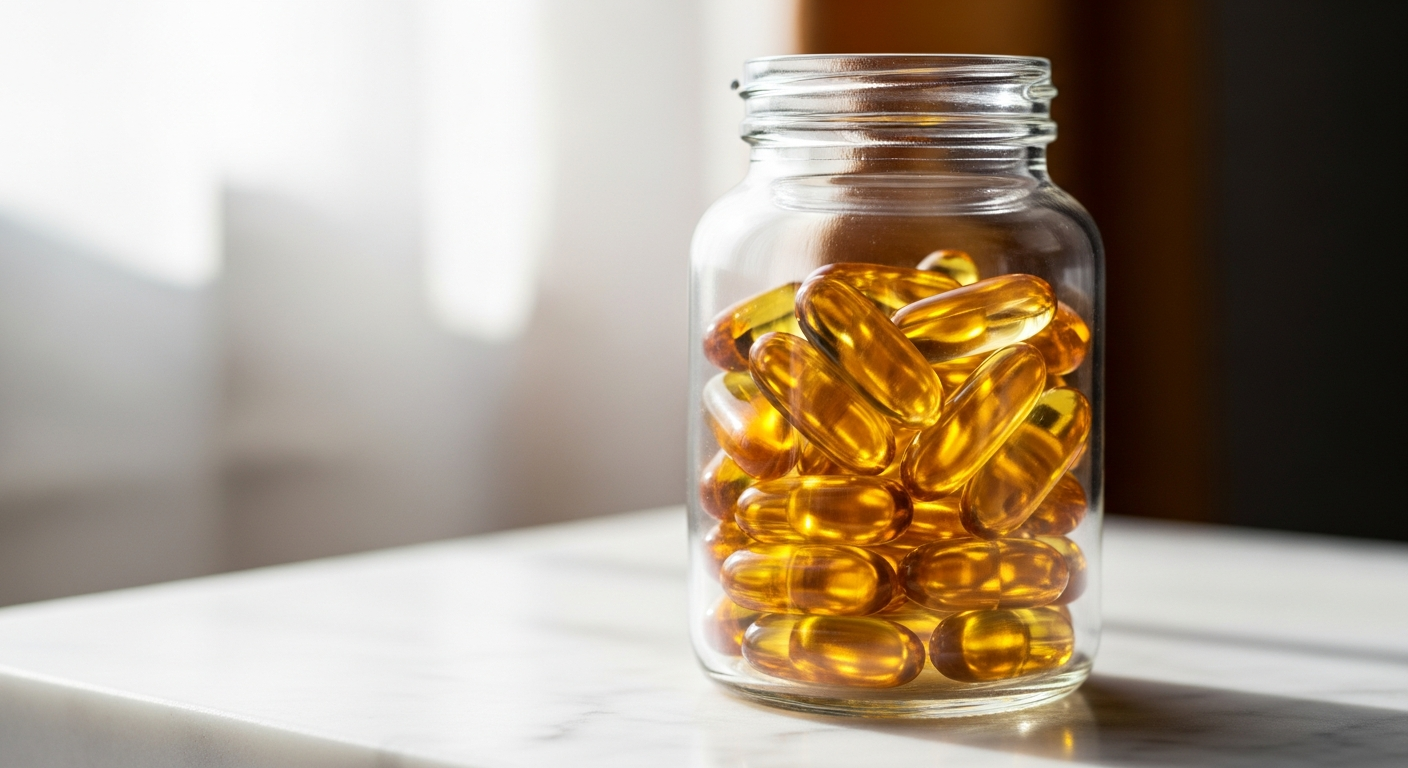
Phosphatidylserine is a phospholipid found in high concentrations in neuronal membranes, and it is currently the only supplement with published randomized trial data showing it can blunt the body’s cortisol response to stress. That is a narrow but meaningful claim. Most adaptogens have animal data or theoretical mechanisms; PS has actual human trials with measurable hormone outcomes. Whether that translates to real-world benefit depends heavily on dose, timing, and what you’re actually asking it to do.
If you’ve been reading about cortisol dysregulation and wondering which supplements have more than marketing behind them, this is one worth examining carefully. The evidence is real but limited in scope, and understanding exactly what the trials showed prevents both over-reliance and unnecessary dismissal.
What Phosphatidylserine Actually Is
Phosphatidylserine is a phospholipid, meaning it has a glycerol backbone with two fatty acid chains and a phosphate group attached to serine. It makes up roughly 15% of the total phospholipid content of the brain, concentrated primarily in the inner leaflet of neuronal membranes. Its structural role is to maintain membrane fluidity, support neurotransmitter receptor function, and facilitate cell-to-cell signaling in neural tissue.
Early supplement forms derived PS from bovine brain cortex, which produced the strongest cognitive data but was discontinued over BSE concerns. Modern products use either soy lecithin or sunflower lecithin as the source material. The fatty acid profile differs from bovine-derived PS, which matters more for cognitive outcomes than for the cortisol-modulating effects studied in the trials below. For stress and HPA axis applications, sunflower-derived PS performs comparably to soy-derived, with the practical advantage of avoiding soy allergens and phytoestrogen content.
The HPA axis, the hypothalamic-pituitary-adrenal signaling cascade, is the primary pathway through which PS appears to act. It does not block cortisol synthesis outright. Instead, the proposed mechanism involves dampening pituitary sensitivity to ACTH signals, which reduces downstream adrenal output during acute stress events. This distinction matters for setting realistic expectations.
The Monteleone Trial: What the Acute Stress Data Actually Shows
The most-cited human evidence comes from a 1990 trial by Monteleone and colleagues published in Neuroendocrinology, in which healthy male subjects received 800mg of bovine-cortex PS daily for ten days before undergoing standardized physical stress (cycling to exhaustion). The result: ACTH and cortisol responses were significantly blunted compared to placebo. A follow-up study using 400mg produced a similar directional effect, though the magnitude was smaller.
This trial is legitimate and methodologically sound for its era. The mechanism it demonstrates is attenuation of the acute stress response, not elimination of cortisol entirely. Subjects still mounted a cortisol response to exercise; it was simply lower in peak amplitude. That is a physiologically meaningful finding if you are dealing with situations where your stress response is chronically overactivated relative to the actual stressor, which is the context where PS has genuine clinical relevance. For more on how the HPA axis behaves during early morning awakening specifically, the pattern described in cortisol awakening response and 3 AM waking maps directly onto the mechanism PS addresses.
One important note: the Monteleone data used bovine-cortex PS, which has a different lipid composition than soy or sunflower variants now available. Extrapolating the exact effect sizes to modern products involves some uncertainty, though subsequent smaller studies with soy-derived PS showed directionally consistent results at comparable doses. The NIH Office of Dietary Supplements includes PS in its reviewed database with a note that cognitive and stress-related data are the primary areas of human trial activity (NIH ODS fact sheets).
The Hellhammer Trials: Chronic Stress and Sustained Use
A separate cluster of research from Hellhammer and colleagues examined PS under conditions of chronic psychosocial stress rather than acute physical stress. In one double-blind crossover trial, participants under chronic work stress received 300mg daily of soy-derived PS for four weeks. Salivary cortisol was modestly but significantly reduced compared to placebo, and self-reported mood scores improved alongside the hormonal changes.
The effect size in the Hellhammer work is smaller than in the Monteleone acute-stress protocol. That is expected: blunting a single explosive stress response is mechanistically different from reshaping a chronically elevated cortisol baseline. What the Hellhammer data does establish is that the effect is not purely acute and disappears without repeated dosing. Sustained supplementation at 300mg appears to produce a cumulative modulating effect on the HPA axis, not just a one-time blunting of stress peaks.
This is clinically relevant for anyone dealing with the kind of low-grade, persistent cortisol elevation that doesn’t spike during exercise but stays elevated throughout the day and into the night. The Hellhammer trials are also notable for using a dose (300mg) that is achievable with standard commercial PS products, unlike the 800mg protocol in the Monteleone work which requires stacking multiple high-dose capsules. For a broader perspective on how the anxiety and cortisol relationship responds to supplementation, the evidence on silexan as an anxiety supplement offers a useful comparison point on how different mechanisms can produce similar symptomatic outcomes.
Where Phosphatidylserine Probably Does Not Help
The supplement industry has attached PS to two claims that the evidence does not support well: cognitive enhancement in healthy young adults, and memory improvement in older adults without diagnosed impairment.
The cognitive data in young, healthy populations is weak. Several small trials show no significant effect on memory, processing speed, or executive function in subjects without baseline impairment. The early positive cognitive studies used bovine-derived PS in older adults with diagnosed memory decline, and the FDA’s 2003 qualified health claim for PS and cognitive dysfunction was explicitly restricted to populations with existing impairment. Extending that claim to healthy young adults is not supported by the trial record.
Depression is an area where PS is sometimes proposed, partly because phospholipid metabolism is altered in depressive states. The evidence here is equivocal at best. One small trial showed some benefit as an adjunct, but the study populations, doses, and methodologies are too inconsistent to draw conclusions. If you are assessing this for mood-related applications, the mechanistic overlap with HPA axis dysregulation is plausible but the clinical evidence does not justify PS as a primary intervention for depression. This is also worth reading alongside the evidence review on adrenal fatigue, which covers the broader landscape of cortisol-related claims that lack adequate trial support.
How to Use Phosphatidylserine Practically
The most evidence-supported application for modern PS products is 100 to 300mg taken in the evening, aimed at reducing the nocturnal cortisol elevation that causes difficulty staying asleep or the 3 AM awakening pattern. The cortisol-blunting effect appears to be relevant when the HPA axis is already sensitized, and evening dosing positions the supplement at the time when cortisol should be naturally low but is dysregulated in chronically stressed individuals.
Source selection matters. Sunflower-derived phosphatidylserine avoids soy phytoestrogens and is suitable for those with soy sensitivity. The phospholipid content per capsule varies significantly between products; look for standardized PS content (not total phospholipid extract) of at least 100mg per capsule. Stacking with magnesium glycinate is logical because both target the late-evening cortisol and arousal profile through different mechanisms, and there is no known interaction between them.
Realistic expectations: PS will not eliminate cortisol. It appears to reduce the amplitude of stress-triggered peaks and modestly lower chronic baseline output. Most people who respond notice improved sleep continuity within two to four weeks at 300mg daily. Non-responders are common, particularly in people whose sleep problems are not primarily driven by HPA axis hyperactivity. No serious safety concerns have emerged in published trials at doses up to 800mg daily, and there are no documented interactions with common medications, though the data on thyroid medication specifically is covered in the FAQ below.
Frequently Asked Questions
Does phosphatidylserine work for sleep?
Phosphatidylserine can improve sleep in people whose sleep disruption is driven by elevated cortisol at night. The mechanism is attenuation of HPA axis activity, not sedation. If your 3 AM waking is accompanied by an alert, wired feeling rather than a groggy one, PS is targeting the right pathway. It does not work as a direct sleep aid and will not produce sedation in people with normal nocturnal cortisol levels.
Is the soy-derived version safe?
Soy-derived PS is the most studied modern form and has not shown adverse effects in published trials at doses up to 600mg daily. The phytoestrogen concern applies primarily to soy isoflavones, not to the phospholipid fraction. That said, individuals with diagnosed estrogen-sensitive conditions may prefer sunflower-derived phosphatidylserine, which provides equivalent PS content without any isoflavone exposure.
How long does it take for phosphatidylserine to work?
Acute cortisol blunting from a single high dose (400 to 800mg) appears in trial data within hours of administration under stress conditions. For chronic stress applications at 300mg daily, the Hellhammer trial data suggests meaningful cortisol reduction after three to four weeks of consistent use. If you see no change in sleep quality or stress reactivity after six weeks at 300mg, HPA axis dysregulation is likely not your primary driver.
Can phosphatidylserine interfere with thyroid medication?
No interaction between phosphatidylserine and thyroid medications has been documented in the published literature. PS acts on the pituitary-adrenal axis, not the thyroid axis, and the two pathways are mechanistically distinct. That said, given that cortisol and thyroid hormones interact at the receptor level, anyone on levothyroxine or similar medications should confirm with their prescribing physician before adding PS at therapeutic doses.
The clinical trial record for phosphatidylserine and cortisol is genuinely more solid than most stress supplements can claim. Two independent research groups, Monteleone and Hellhammer, found measurable hormone effects using different stressor types and dose protocols. That replication matters. Where the evidence thins out is in cognitive enhancement for healthy populations and in any application where cortisol is not the primary variable being addressed. Used appropriately, at 300mg in the evening for cortisol-driven sleep disruption, it is one of the better-supported single-mechanism supplements in this category.
Article reviewed by the DL Method editorial team. Content reflects published trial data as of May 2025 and is intended for informational purposes. Consult a qualified healthcare provider before using any supplement if you have a diagnosed medical condition or are taking prescription medications.
—
META TITLE: Phosphatidylserine and Cortisol: Trial Evidence (58 chars)
META DESCRIPTION: Phosphatidylserine has human trial data on cortisol suppression from Monteleone and Hellhammer studies. Here is what the evidence actually shows. (153 chars)
SLUG: phosphatidylserine-cortisol-evidence
SCHEMA: Article + FAQPage (JSON-LD)
INTERNAL LINKS USED:
1. /wake-up-3am-anxiety-cortisol-awakening-response/ — anchor: “cortisol awakening response and 3 AM waking”
2. /silexan-lavender-supplement-anxiety-evidence/ — anchor: “silexan as an anxiety supplement”
3. /adrenal-fatigue-evidence-review/ — anchor: “evidence review on adrenal fatigue”
EXTERNAL CITATIONS:
1. Monteleone et al., Neuroendocrinology 1990 — cited in H2 “The Monteleone Trial”
2. NIH ODS fact sheets — https://ods.od.nih.gov/factsheets/list-all/ — cited in H2 “The Monteleone Trial”
Medically reviewed by Dr. Marcus Reid. Last reviewed: May 2026. Educational, not personalized medical advice.