
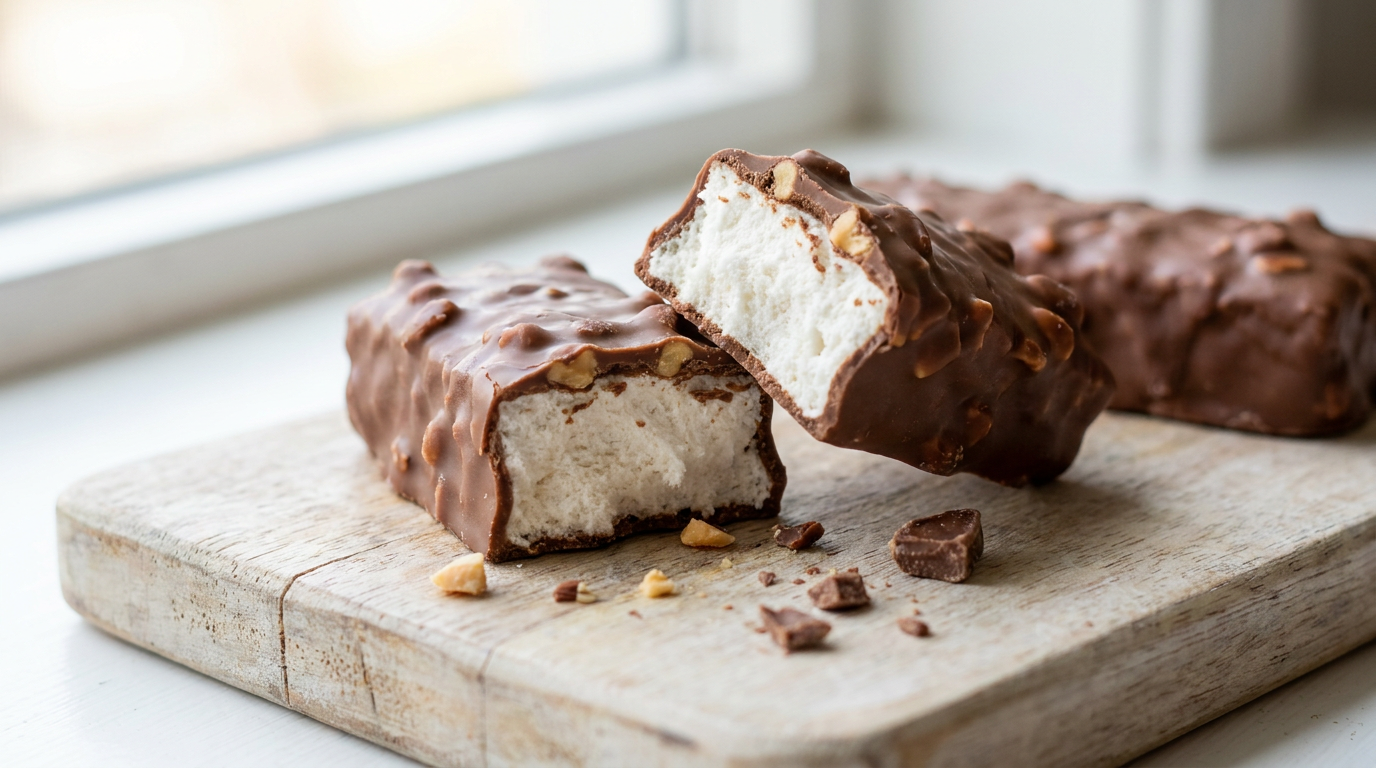
Puff protein bars are the marshmallow-textured line from BUILT: 15 to 17 g of protein, 140 to 160 calories and 6 to 8 g of real sugar per bar, depending on flavor. A 12-count box costs $29.99 on built.com, or $2.50 a bar.
The panel itself is short. Brownie Batter, a 44 g bar, lists a whey protein isolate and collagen blend, glycerin, sugar, water, palm and palm kernel oil, cocoa, gelatin, natural flavors, cultured dextrose, nonfat milk powder and soy lecithin.
What the label lists, and in what order
Ingredients are listed by weight, so the order tells you what the bar is mostly made of. The protein blend comes first, glycerin second and sugar third. BUILT’s own copy says glycerin adds a mild sweetness and helps with texture, which is the soft, airy center the line is sold on.
Two lines deserve a second look: gelatin and sugar. Gelatin appears in every flavor, which rules the bars out for vegetarians even though nothing on the front of the box says so.
The sweetener is plain sugar rather than erythritol or maltitol, so all 6 g on the Brownie Batter panel count as added sugars, or 12 percent of the daily value.
The Cookie Dough Chunk flavor is the outlier. Its cookie pieces add wheat flour, brown sugar and palm oil, which pushes the bar to 160 calories, 8 g of sugar and 15 g of protein. BUILT labels that flavor as not gluten-free, while Brownie Batter and Peanut Butter Cup carry a certified gluten-free label.
Video: Matt Rosenman
Collagen counts on the label, but it is not whey
The blend is called a Premium Collagen Protein Blend, and the panel does not say how much of the 17 g is collagen and how much is whey isolate.
On most flavors whey isolate is listed first inside the blend. On Peanut Butter Cup the order flips and collagen comes first, so that bar carries more collagen than whey.
Collagen is scored differently from whey. Under PDCAAS (Protein Digestibility-corrected Amino Acid Score), the scoring method US food labeling relies on, collagen lacks the essential amino acid tryptophan and is classed as an incomplete protein, according to a 2019 review in Nutrients.
The same paper calculated that collagen can supply up to 36 percent of daily protein in a typical American diet without unbalancing amino acid intake.
A Puff is a reasonable snack when the rest of your day includes complete proteins such as dairy, eggs, meat or soy. It is a weaker choice as your only protein after training, one of several moments the BUILT product page suggests for eating one. This is general nutrition information, not individual advice.
Puff bars against the bars already reviewed here
The table puts three Puff flavors next to three mainstream bars, using each manufacturer’s nutrition panel and store price as read on September 29, 2026. Protein per 100 calories is our arithmetic from those label figures.
| Bar | Protein | Total sugars | Calories | Protein per 100 kcal | Price per bar | Protein source on the label |
|---|---|---|---|---|---|---|
| BUILT Puff, Brownie Batter | 17 g | 6 g (6 g added) | 140 | 12.1 g | $2.50 (12ct, built.com) | Whey protein isolate, collagen |
| BUILT Puff, Peanut Butter Cup | 17 g | 6 g (6 g added) | 150 | 11.3 g | $2.50 (12ct, built.com) | Collagen, whey protein isolate |
| BUILT Puff, Cookie Dough Chunk | 15 g | 8 g (8 g added) | 160 | 9.4 g | $2.50 (12ct, built.com) | Whey protein isolate, collagen |
| Quest, Chocolate Chip Cookie Dough | 21 g | 1 g (0 g added, 6 g sugar alcohols) | 190 | 11.1 g | $2.96 (12ct, questnutrition.com) | Milk protein isolate, whey protein isolate |
| Think Products, Brownie Crunch | 20 g | 1 g (0 g added, 11 g sugar alcohol) | 240 | 8.3 g | $2.40 (10ct, thinkproducts.com) | Soy protein isolate, calcium caseinate, whey protein isolate |
| RXBAR, Chocolate Sea Salt | 12 g | 14 g (0 g added) | 200 | 6.0 g | $2.33 (12ct, shop.rxbar.com) | Egg whites, cashews, almonds |
Sources: BUILT Brownie Batter, BUILT Peanut Butter Cup, BUILT Cookie Dough Chunk, Quest, Think Products, RXBAR product pages.
The trade-off shows. Quest and Think Products post more protein and 1 g of sugar, but they get there with 6 to 11 g of sugar alcohols, the same erythritol and maltitol question raised in our ranking of protein bars by what is actually in them.
RXBAR uses dates, so its 14 g of sugar is natural fruit sugar with none added. BUILT takes a third path: real sugar, 6 to 8 g of it, at the lowest calorie count in the group.
If you are shopping specifically for protein bars without added sugar, a Puff does not qualify. If you want a 140-calorie dessert with a real protein number, it fills the sweet slot that the protein chips we tested leave open on the savory side.
Frequently asked questions
Are Puff protein bars a complete protein?
Not on their own. The blend mixes whey protein isolate, which is complete, with collagen, which lacks tryptophan and is scored as incomplete under PDCAAS. BUILT does not publish the split. Eaten alongside meals with dairy, eggs, meat or soy, the gap is covered; as a sole protein source it is a weaker pick.
How much sugar is in a Puff protein bar?
Brownie Batter and Peanut Butter Cup list 6 g of total sugars per bar, all of it added sugar, or 12 percent of the daily value on the label. Cookie Dough Chunk lists 8 g. The sweetener is ordinary sugar, so no flavor contains sugar alcohols such as erythritol or maltitol.
Are Puff protein bars gluten-free?
Most of the line is, but not all. Brownie Batter and Peanut Butter Cup carry a certified gluten-free label on built.com. Cookie Dough Chunk is the exception: its cookie dough pieces contain wheat flour and BUILT lists it as not gluten-free. Check the flavor, not the variety box, before buying.