
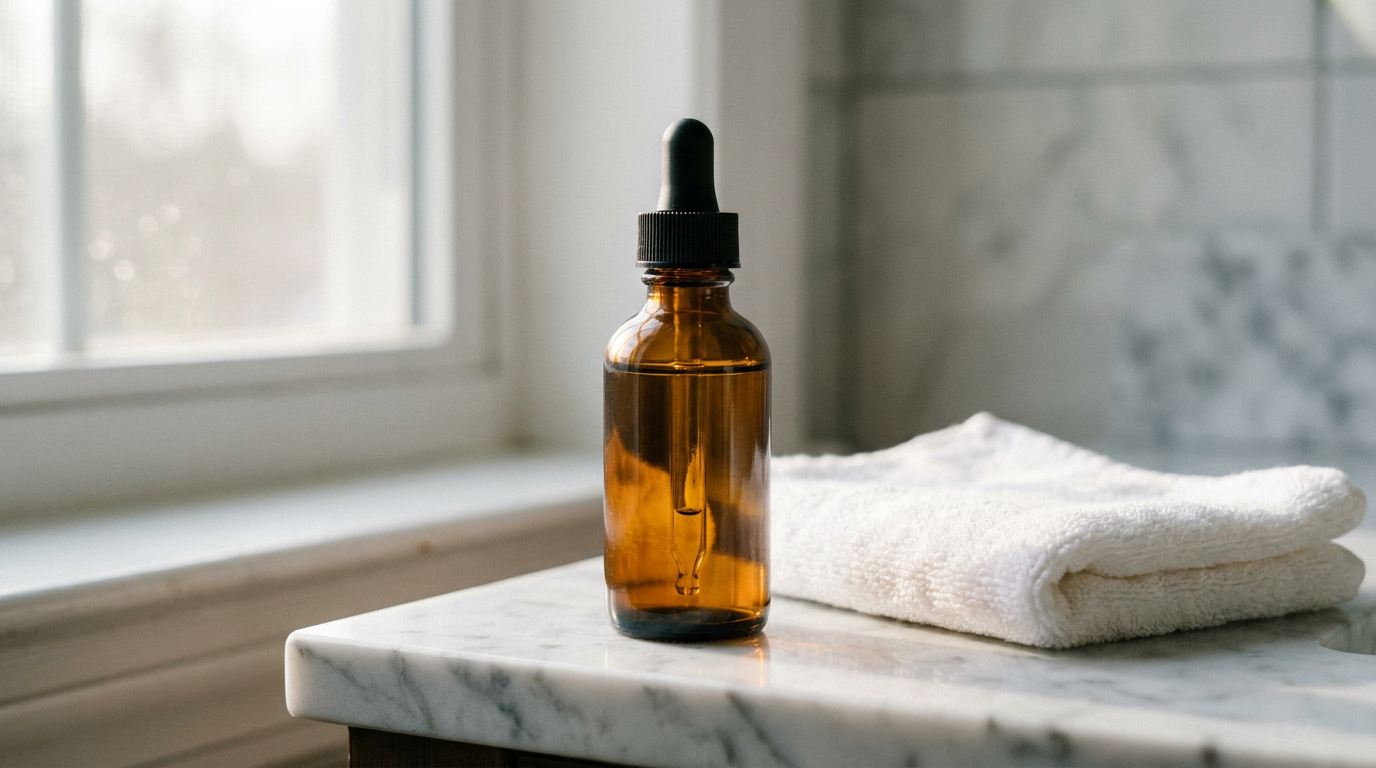
The best vitamin C serum for sensitive skin is a low-percentage L-ascorbic acid formula near the bottom of the effective range, around 10 percent rather than 20, with vitamin E and ferulic acid alongside it.
Comfort comes from where you land inside that range, not from picking a gentler-sounding ingredient name.
The sting has a chemical explanation, and the label tells you in advance how a serum will feel.
Why a Serum That Works Feels Sharp at First
L-ascorbic acid is hydrophilic, unstable and electrically charged, which is why it barely crosses the outer layer of skin.
A 2017 review in the Journal of Clinical and Aesthetic Dermatology explains the workaround. Formulating below pH 3.5 converts the molecule to its uncharged form, improving both stability and penetration.
Healthy adult skin holds a mildly acidic surface of roughly pH 4.5 to 5.0, the acid mantle. A serum built below 3.5 is more acidic than the surface it lands on.
That gap is what you feel. The tingle tracks the acidity doing the delivery work, so it is not a quality signal.
Read the Concentration Window From the Bottom Up
The same review puts a floor and a ceiling on the percentage. Below roughly eight percent a topical product is generally not biologically significant. Above 20 percent there is no further biological significance, and irritation becomes more likely instead.
Credible products therefore cluster between 10 and 20 percent, and most shoppers reach for the top.
Reactive skin should do the opposite. A 10 percent serum sits inside the evidence. A 25 percent serum sits outside it and buys nothing but a stronger reaction.
Reading the form rather than the marketing word is the same habit that separates vitamin D2 from D3 at the pharmacy.
What the Neutral-pH Options Quietly Cost You
Magnesium ascorbyl phosphate and ascorbyl-6-palmitate get marketed to sensitive skin for a real reason. They are esterified derivatives, stable at neutral pH, so the formula never has to go acidic.
There is a catch in the same review. One study it cites found that daily application of magnesium ascorbyl phosphate, ascorbyl-6-palmitate and other derivatives did not raise L-ascorbic acid levels in the skin at all.
You are trading proven delivery for guaranteed comfort. That can still be the right call if acid formulas leave you red for hours. Just know which half of the deal is certain.
For the rest of the panel, work through how a vitamin C ingredient list actually reads.
Introducing It Without Setting Your Face Off
Patch test along the jawline for several days first.
Apply to fully dry skin, every other morning, and go daily only once that rhythm feels boring. Damp skin spreads the acid further than you intended.
If it still bites, put moisturizer on first and layer the serum over it. You lose some penetration and keep the routine.
Vitamin C is the skin’s primary replenisher of vitamin E, and the two work together in photoprotection, which is why the pairing keeps appearing on labels.
If a reaction spreads past your face with flushing, hives or itching, that belongs to a conversation about mast cell activation and a doctor, not to your serum shelf. This is general information, not medical advice.
Does a vitamin C serum have to sting to work?
No. The sting reflects acidity, and acidity is what carries L-ascorbic acid into skin, but nothing in the literature ties more discomfort to more benefit. Past 20 percent the irritation arrives without added biological significance.
Is a 10 percent serum too weak to do anything?
No. The threshold for biological significance sits above roughly eight percent, so 10 percent is already inside the effective range, just at the calmer end.
Can a vitamin C serum replace sunscreen?
No. The review credits topical vitamin C with protecting against photoaging and ultraviolet-induced immunosuppression, which supports your sun protection rather than substituting for it.