
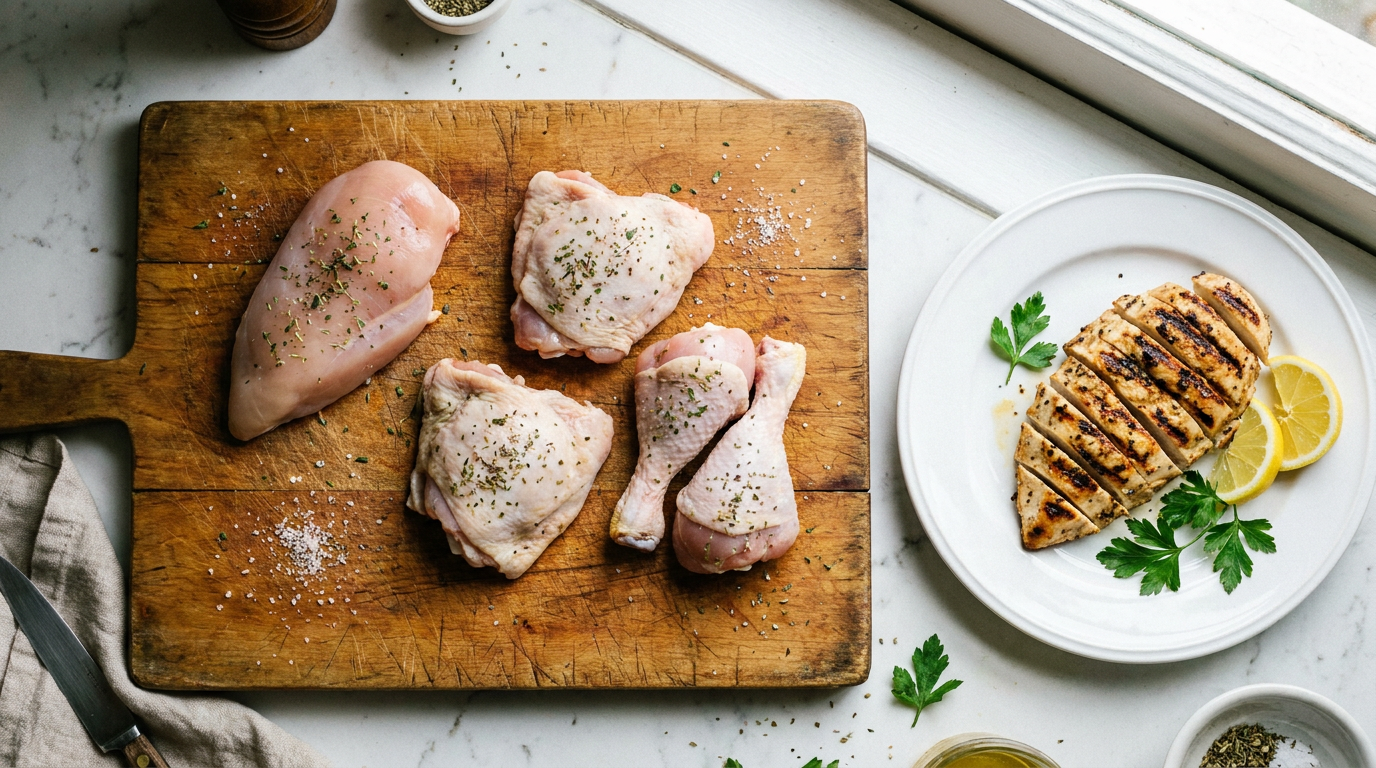
Chicken breast has about 22.5 g of protein per 100 g raw and about 31 g per 100 g once cooked, according to USDA FoodData Central. How much protein in chicken you actually eat depends on whether you weigh it before or after cooking.
Thighs and drumsticks land lower, at 19.4 to 19.7 g raw and 24.2 to 24.8 g cooked per 100 g. The protein in the piece barely changes on the stove. Water leaves, so every remaining gram gets denser.
Chicken breast protein, raw versus cooked
USDA lists skinless, boneless breast at 22.5 g protein per 100 g raw and 30.54 g per 100 g grilled.
Run the math on USDA’s reference pieces (272 g raw, 196 g grilled) and you get 61.2 g of protein raw and 59.9 g grilled. The protein is nearly unchanged while the weight drops by about 28%.
Food logs go wrong at that gap. Weigh 113 g of cooked breast, log it with the raw entry, and you record 25.4 g when the plate actually holds about 34.5 g.
Video: Felu – Fit by cooking
Breast, thigh and drumstick compared
The table uses USDA’s own piece weights for skinless meat, raw and cooked.
| Cut | USDA piece, raw | USDA piece, cooked | Protein per 100 g raw | Protein per 100 g cooked | Protein per cooked piece |
|---|---|---|---|---|---|
| Breast, boneless (grilled) | 272 g | 196 g | 22.5 g | 30.5 g | 59.9 g |
| Thigh (roasted) | 149 g | 116 g | 19.7 g | 24.8 g | 28.7 g |
| Drumstick (roasted) | 122 g | 96 g | 19.4 g | 24.2 g | 23.3 g |
Source: USDA FoodData Central, SR Legacy entries 171077, 171534, 173627, 172388, 173614 and 172376. SR Legacy is a fixed USDA dataset, so brand-name products can differ.
Why thighs cost you more calories per gram of protein
Roasted thigh meat carries 8.15 g of fat and 179 kcal per 100 g. Roasted breast meat carries 3.57 g of fat and 165 kcal.
Compared roasted to roasted, breast gives about 18.8 g of protein per 100 kcal, drumstick 15.6 g and thigh 13.8 g. If you are eating in a deficit, breast buys you more protein for the same calories.
The label detail that quietly lowers your protein
Some packs say “with added solution” or “enhanced.” That means the label lists a broth or salt solution added to the meat.
USDA lists that raw breast at 20.32 g of protein per 100 g, against 22.5 g for plain breast. Over a 4 oz raw portion you get about 23.0 g instead of 25.4 g, and you pay per pound for the water.
How to log chicken without fooling yourself
Pick one state and stay with it. Weighing raw is the most consistent, because cooked weight shifts with pan time and oven heat. If you buy rotisserie or pre-cooked chicken, the raw method fails, so log a cooked entry instead.
If you batch-cook, weigh the whole raw pack, then weigh the cooked total. Divide your portion by that ratio and you can still use the raw entry.
On days the chicken runs short, a scoop of whey protein isolate or a bowl of protein pasta can fill the gap. Our list of high protein snacks for weight loss covers the hours between meals.
This is general nutrition information, not individual dietary advice. If you have kidney disease or a prescribed protein target, follow your clinician’s numbers.
Common questions about chicken protein
How much protein is in 100 g of cooked chicken breast?
USDA lists 30.54 g of protein per 100 g of grilled skinless breast and 31.02 g for roasted breast meat. Around 31 g per 100 g is a fair working number when you weigh the chicken after cooking.
Does cooking chicken destroy protein?
Not in any meaningful amount. USDA’s reference raw breast piece (272 g) holds 61.2 g of protein and its grilled piece (196 g) holds 59.9 g. Cooking drives off water, so the weight falls while protein per 100 g rises.
Is chicken thigh a good protein source?
Yes. A skinless roasted thigh holds about 28.7 g of protein. It also carries 8.15 g of fat and 179 kcal per 100 g, so you get less protein per calorie than from breast.