
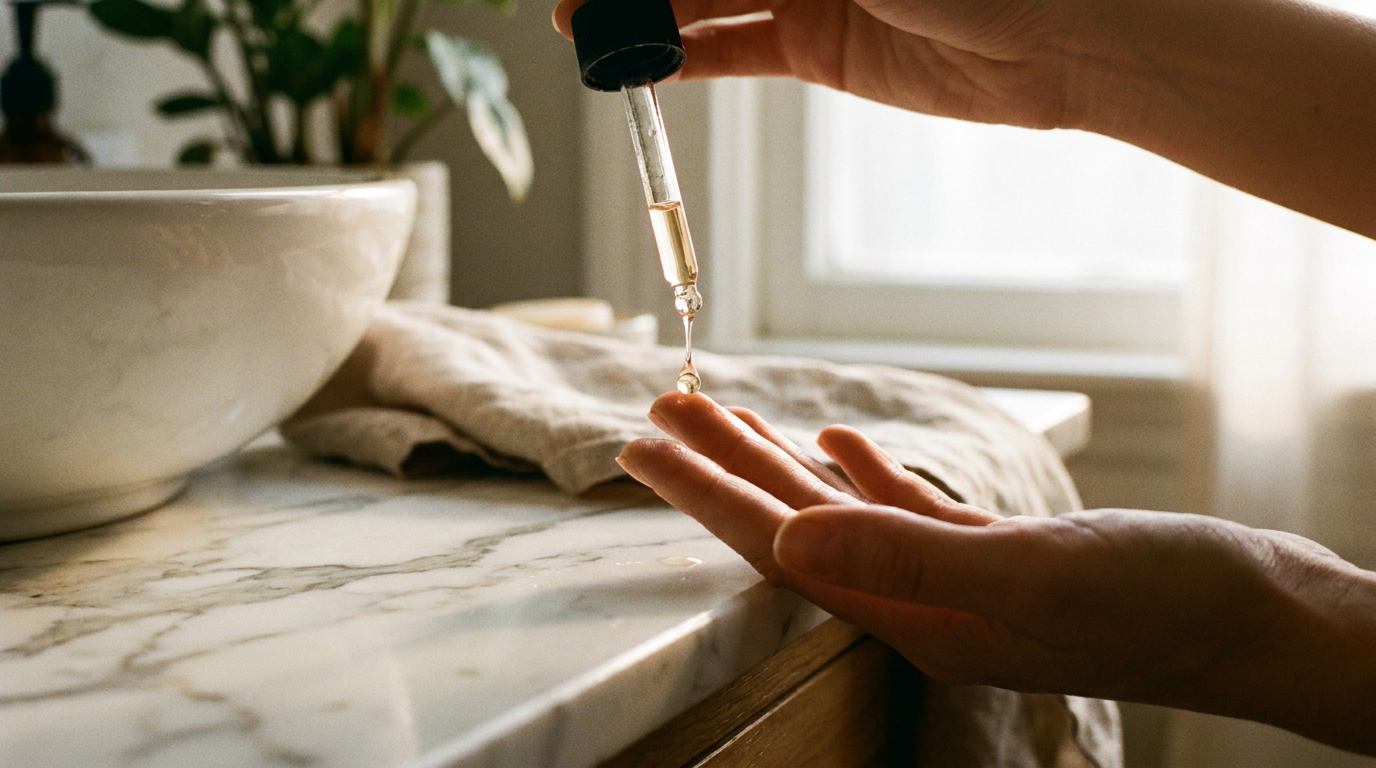
The best vitamin C serum for glowing skin is the one whose label reads L-ascorbic acid between 10 and 20 percent, formulated at a pH below 3.5, with vitamin E and ferulic acid alongside it.
That combination is what the dermatology literature actually supports. Everything else on the front of the bottle is packaging.
The same label-reading habit separates a useful supplement from an expensive one when you check what is on a vitamin D label.
What the Percentage on the Bottle Buys You
A 2017 review in the Journal of Clinical and Aesthetic Dermatology puts a floor under the number. For a topical vitamin C product to be biologically significant, it generally needs a concentration above eight percent.
There is a ceiling too. The same review of topical vitamin C reports that going above 20 percent adds no further biological significance and may irritate skin instead. Reputable serums sit in the 10 to 20 percent band.
So a 30 percent serum is not three times better than a 10 percent one. It is a marketing number.
Why pH Below 3.5 Decides Whether Anything Absorbs
L-ascorbic acid is water-loving, unstable, and electrically charged. The outer layer of your skin is the opposite, which is why an untuned formula mostly sits on the surface.
Dropping the formula’s pH below 3.5 converts the molecule to its uncharged form. That single change improves both stability and penetration.
Ferulic acid does two jobs at once. It stabilises the vitamin C molecule and helps pull the formula under that pH 3.5 threshold.
Vitamin E belongs there for a different reason. Vitamin C is the primary replenisher of vitamin E in skin, and clinical work has shown the two working synergistically against ultraviolet damage.
The Gentler-Sounding Names That Do Less
Magnesium ascorbyl phosphate and ascorbyl-6-palmitate are esterified derivatives. They are oil-loving, stable at neutral pH, and they appear in serums marketed at sensitive skin.
The catch is delivery. One study cited in that review found daily application of these derivatives did not raise L-ascorbic acid levels in skin at all.
Stability is not the same as getting the active where it needs to go, the same way the chemical form of vitamin D changes what it does in your body.
Where the Glow Actually Comes From
Two mechanisms carry most of the visible effect. Vitamin C interacts with copper ions at tyrosinase active sites and blocks that enzyme, which reduces melanin production and evens tone.
It also increases collagen synthesis, stabilises collagen fibres, and slows collagen breakdown. Collagen loss is the same variable behind facial changes people notice after rapid weight loss, including the hollowing described as Ozempic face.
One clinical study of a 25 percent vitamin C formula paired with a penetration enhancer reported a significant drop in melasma pigmentation after 16 weeks. Nothing here works in a week.
The review’s own conclusion is worth carrying to the checkout: human studies on topical vitamin C remain limited, and formulation stability is still the unsolved part. This is general information, not medical advice, and persistent pigmentation is a conversation for a dermatologist.
How long before a vitamin C serum shows results?
Published pigmentation work runs on a scale of months, with the melasma study above measuring change at 16 weeks. Judge a serum after a season of use.
Does a brown or yellow serum still work?
Colour change signals oxidation, and L-ascorbic acid is documented as an unstable molecule. A serum that has darkened is past its useful life whatever the percentage claims.
Should you use vitamin C in the morning or at night?
Either can work, though the photoprotective evidence pairs vitamin C with vitamin E against ultraviolet exposure, which argues for daytime use under sunscreen. A serum does not replace sunscreen.