
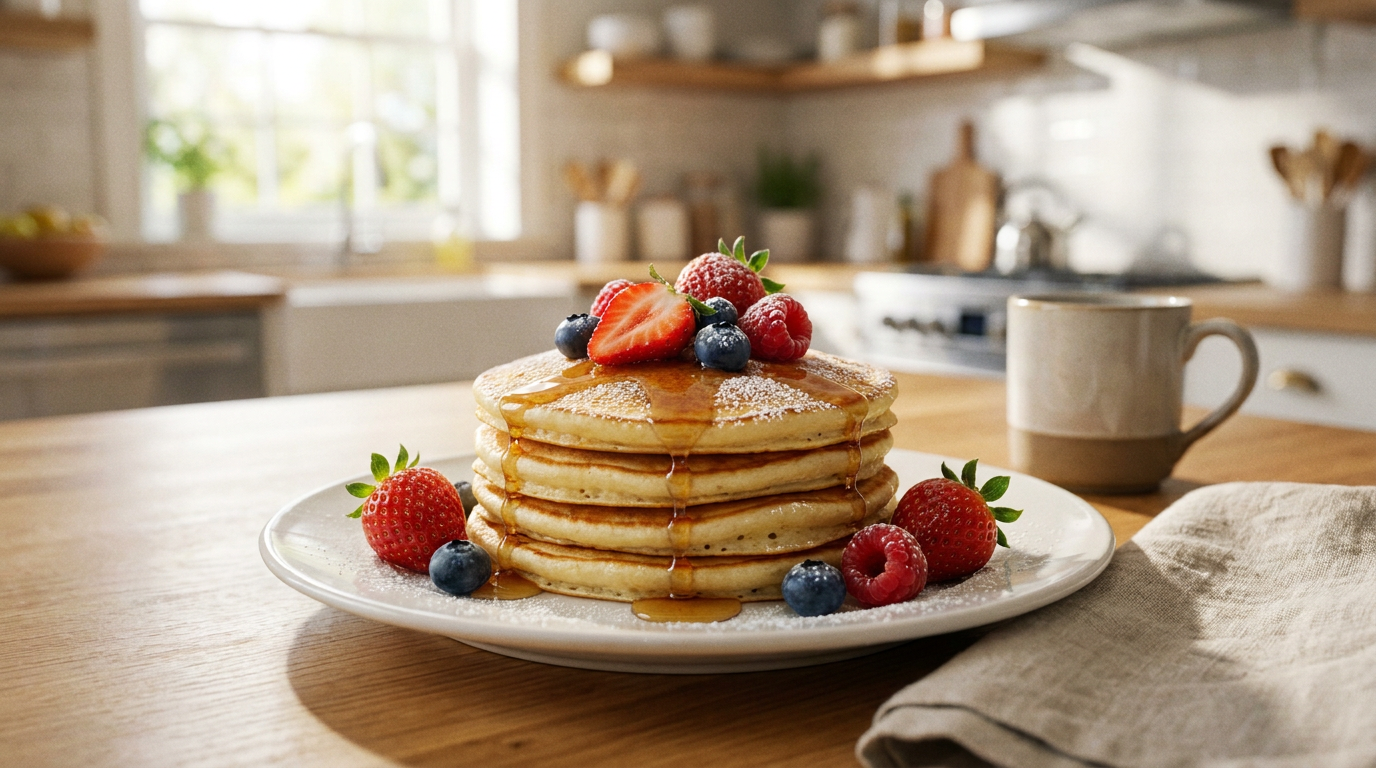
Cottage cheese protein pancakes are pancakes made by blending cottage cheese with eggs and oats into a smooth batter, then cooking them like you would any stack. The curds disappear completely once they hit the blender, so what lands in the pan is a thicker, more filling pancake with no powder scoop involved.
You have probably seen the trend on your feed already. Someone dumps cottage cheese into a blender, adds a couple of eggs and a handful of oats, and out comes a batter that looks nothing like the tub it started in.
The appeal is simple. It gives you a higher-protein breakfast using ingredients most people already have, and it skips the chalky aftertaste some protein powders leave behind. That combination is exactly why the format keeps resurfacing every few months.
Why cottage cheese took over the pancake batter
Cottage cheese has been rebranding itself for a couple of years now, moving from a diet-food punchline to a genuine kitchen staple. Bakers stir it into brownies and blend it into smoothies, and now it goes straight into pancake batter.
Blending is the trick that makes it work. Whole curds would feel lumpy in a pancake, but a smooth blend leaves behind a denser, custardy texture instead.
If you are already building a higher-protein pantry, cottage cheese is one of the cheapest ways to bulk up a recipe.
What you need for the batter
The base version only needs four ingredients, and most kitchens already have them on hand.
- 1 cup cottage cheese (any fat percentage works)
- 2 eggs
- 1/2 cup rolled oats
- 1/2 teaspoon baking powder
Optional add-ins include a splash of vanilla extract, a pinch of cinnamon, or a spoon of honey if you want a sweeter finish. Berries, banana slices, or chopped nuts fold in nicely too, similar to the fruit-forward picks in our high protein snacks for weight loss list.
How to make cottage cheese pancakes
Add the cottage cheese, eggs, oats, and baking powder to a blender. Blend on high until the mixture turns smooth and pale, with no visible curds left.
Heat a lightly greased nonstick pan or griddle over medium-low heat. Pour small rounds of batter, since this style spreads less than a standard pancake and stays thick.
Cook for two to three minutes, until bubbles form on the surface and the edges look set. Flip carefully, since the batter is softer than a flour-based one, then cook the other side until golden.
Stack them with fruit, a drizzle of syrup, or a spoon of nut butter, and serve warm. Leftovers reheat fine in a toaster or a covered pan the next morning.
Where this fits if you already eat this way
If you liked this format, it sits close to the version people make with protein pancakes without protein powder, since both lean on real food instead of a scoop.
Cottage cheese also shows up in savory dishes, including the growing wave of protein pasta options now sitting on most grocery shelves. This is general food information, not medical or dietary advice.
Frequently Asked Questions
Do cottage cheese protein pancakes actually taste like cottage cheese?
Not really. Once blended smooth and cooked, the flavor is mild and closer to a slightly tangy pancake than a bowl of cottage cheese. Cinnamon or vanilla covers most of what tang remains.
Can I make the batter without a blender?
A blender gives the smoothest result, but a hand mixer or an immersion blender can work if you mash the curds thoroughly first. Skipping this step usually leaves lumps in the finished pancake.
What is the best way to store leftovers?
Let the pancakes cool, then stack them with parchment paper between layers and refrigerate for up to three days. Reheat in a toaster, oven, or covered skillet rather than a microwave for the best texture.