
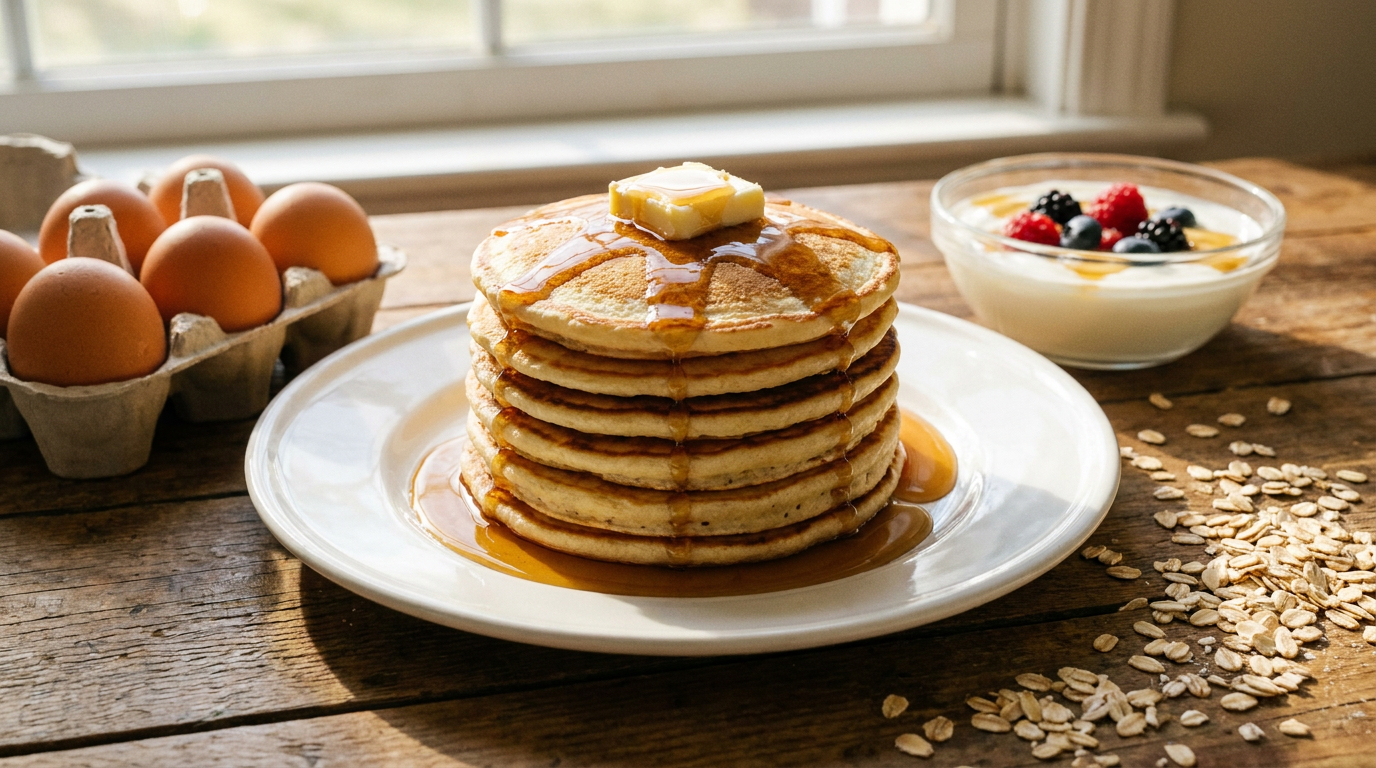
Yes, you can make protein pancakes without protein powder, and most home cooks end up preferring the result. You build the batter around high-protein whole foods instead of a scoop: eggs, Greek yogurt, cottage cheese, and oats do the heavy lifting that whey or casein usually gets credit for. The texture shifts a little denser and the flavor stays closer to a normal pancake, which is exactly why the swap works for people who find powder-based batter gummy or chalky.
The shortcut shows up constantly in search because most kitchens already have these ingredients on hand, and you end up with a pancake that holds together and tastes like breakfast, not a supplement.
What Protein Powder Was Doing in the First Place
Protein powder mostly boosts the protein count without changing the liquid-to-flour ratio much. It is dry and flavorless enough to disappear into batter. Whole foods do not disappear the same way. Cottage cheese adds moisture and a slight tang, Greek yogurt tightens the crumb, and eggs bind and puff. You are rebalancing the recipe around wetter, more flavorful ingredients.
The Whole Foods That Actually Deliver Protein
A handful of everyday staples carry most of the weight in a powder-free batter.
- Cottage cheese, blended smooth, disappears into the batter and adds protein along with moisture that keeps it from drying out.
- Greek yogurt works similarly and brings a mild tang that plays well with vanilla or cinnamon.
- Eggs, especially an extra yolk or white beyond a standard recipe, add structure and richness.
- Rolled oats, ground into a rough flour, add fiber and nutty flavor while stretching the batter.
Combine two or three of these rather than one. Cottage cheese and oats alone can turn dense, while eggs and yogurt together stay fluffier. If you already track intake through high protein snacks built for weight loss, this is the same logic applied to breakfast.
Texture and Taste Tradeoffs You Should Expect
Powder-free protein pancakes are usually thicker and heavier than a boxed mix, closer to a Dutch baby than a diner-style fluffy stack. They brown slightly darker because of the natural sugars in yogurt and cottage cheese. Some people love the denser bite, others miss the airy texture powder helps create.
The flavor payoff usually wins people over. There is no artificial sweetener aftertaste, just eggs, dairy, and oats tasting like breakfast. If your routine already rotates through a protein snack drawer for work, powder-free pancakes fit the same practical mindset without adding another ingredient to buy.
A Starting Ratio Worth Trying
A workable base for two servings: half a cup of cottage cheese, two eggs, a third of a cup of rolled oats blended into flour, a splash of milk, and a small amount of baking powder. Blend until mostly smooth, rest five minutes so the oats soften, then cook on a lightly oiled pan over medium heat. Flip once bubbles form and the edges look set.
The same reasoning applies to protein pasta versus regular pasta, where the manufacturer either adds isolated protein or leans on legume flour instead. Pancakes just let you make that choice yourself, with ingredients you can pronounce.
Can you taste the cottage cheese in protein pancakes?
Once blended smooth and cooked, cottage cheese mostly disappears into the batter. You get a slight richness rather than a distinct flavor, especially with vanilla or cinnamon added.
How much protein do powder-free pancakes actually have?
It depends on your ratio of eggs, dairy, and oats, and it varies by portion size, so there is no single fixed number to quote. More eggs and cottage cheese relative to flour generally raises the protein content compared to a plain flour-and-milk recipe.
Can you make these pancakes ahead of time?
Yes. Cooked pancakes keep well in the refrigerator for a few days in a sealed container and reheat cleanly in a toaster or a dry skillet. Freezing works too, with parchment between layers so they do not stick together.