
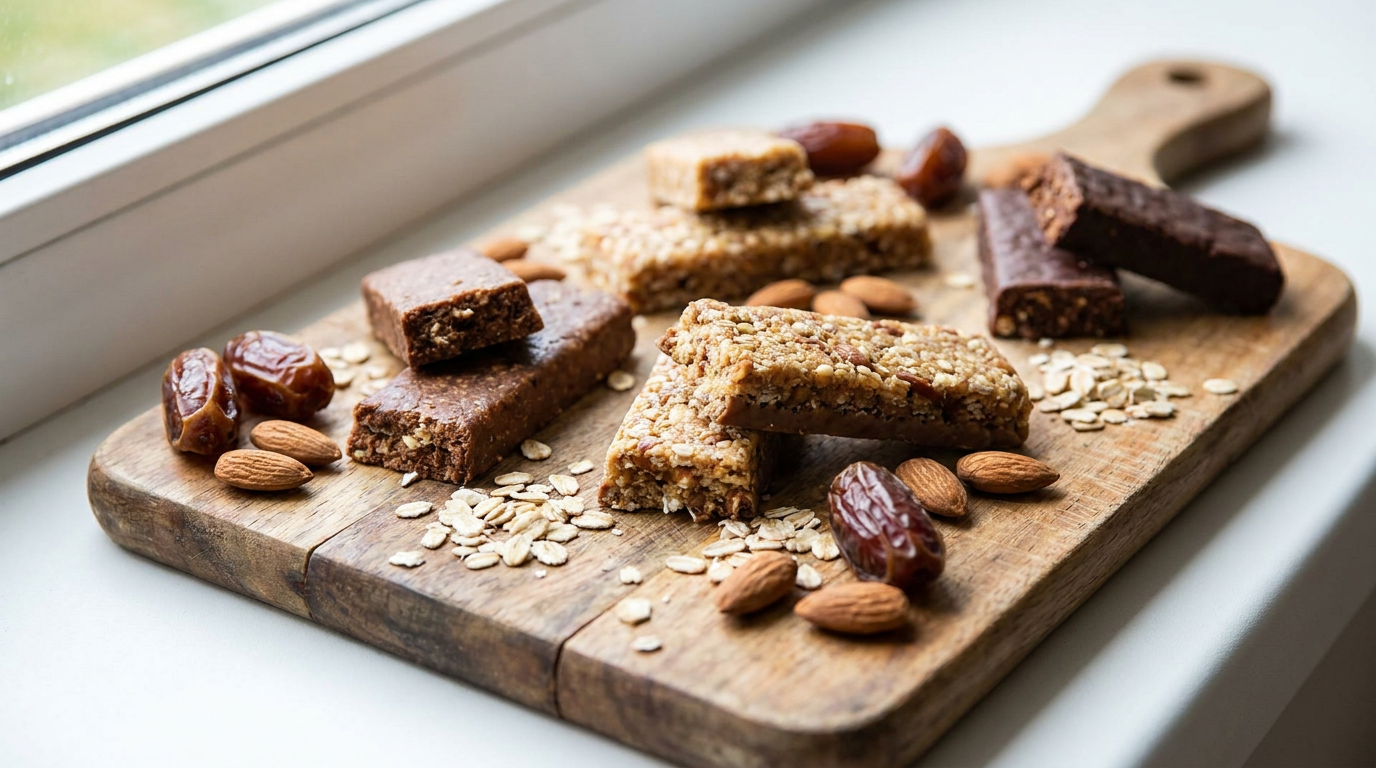
The best protein bars are not the ones with the biggest number on the front. They are the ones where the protein source sits near the top of the ingredient list, sugar alcohols stay modest, and the rest of the bar reads like food instead of a lab experiment. That distinction matters because most shoppers grab a bar based on the box art, then wonder why it tastes like chalk or wrecks their stomach an hour later. Once you know what to scan for, ranking any bar in the aisle takes about ten seconds.
Why the Front of the Box Lies to You
Marketing puts the protein number in giant font because that is what sells. The label tells a different story. A bar can hit 20 grams of protein and still lean on cheap blends and oil fillers that do nothing for you nutritionally.
If you already keep a protein snack drawer for work, the same label logic applies to bars. Check the ingredient panel before the nutrition panel, not after.
Protein Source Comes First, Always
Whey protein isolate, whey protein concentrate, milk protein, egg white, or a pea and rice blend for plant-based bars: these should appear in the first three or four ingredients. If “protein blend” shows up buried after corn syrup, brown rice syrup, and three kinds of oil, the bar is padding its number with filler.
Collagen deserves a mention too. Some bars lean on it to boost the protein figure, but collagen is not a complete protein and behaves differently in your body than whey or soy, even when the grams look similar on paper.
Sugar Alcohols and Fiber Syrups Are Not Automatically Fine
Erythritol, maltitol, and soluble corn fiber let brands post a low “net carb” figure while the ingredient list stays dense with processed sweeteners. Some people tolerate these fine. Others get bloating, especially from maltitol in larger amounts.
A bar with one sugar alcohol listed after real nuts and seeds behaves differently than one where three sweetener variants dominate the first half of the label.
Whole-Food Bars vs Bars That Are Basically Candy
Some bars use dates, nut butter, oats, and whey as the base, then add chocolate as a coating rather than the main event. Others are closer to a candy bar with protein powder mixed in, built on chocolate coating, caramel, and syrup.
Neither format is wrong for every situation. A dense whole-food bar works better as a meal stand-in. A dessert-style bar works better as an occasional treat that happens to carry more protein than a cookie. The mistake is treating one like the other.
This is the same logic behind picking snacks for high protein snacks aimed at weight loss: ingredient quality decides whether a snack supports your goal or just adds calories with a health halo attached.
A Thirty-Second Label Checklist
Before you buy, scan for this: protein source in the first four ingredients, sugar alcohols limited to one or two types, and at least one whole-food ingredient like nuts, oats, or dates.
For a bigger comparison set, the roundup of high protein snacks you can buy at the store is a good next stop beyond bars alone.
Frequently Asked Questions
Are protein bars actually healthy?
It depends on the ingredient list. A bar built on a real protein source and whole foods can be a solid snack. One built mostly on syrups and sweeteners with protein added on top is closer to a candy bar.
How many sugar alcohols in a protein bar is too many?
There is no universal cutoff, and tolerance varies by person. Be more cautious with bars that stack multiple sugar alcohols high on the ingredient list rather than one used in moderation.
Are plant-based protein bars as good as whey-based ones?
A well-formulated plant-based bar using a pea and rice blend can hold up fine against a whey-based one. The quality gap usually comes from filler ingredients, not the protein type itself.