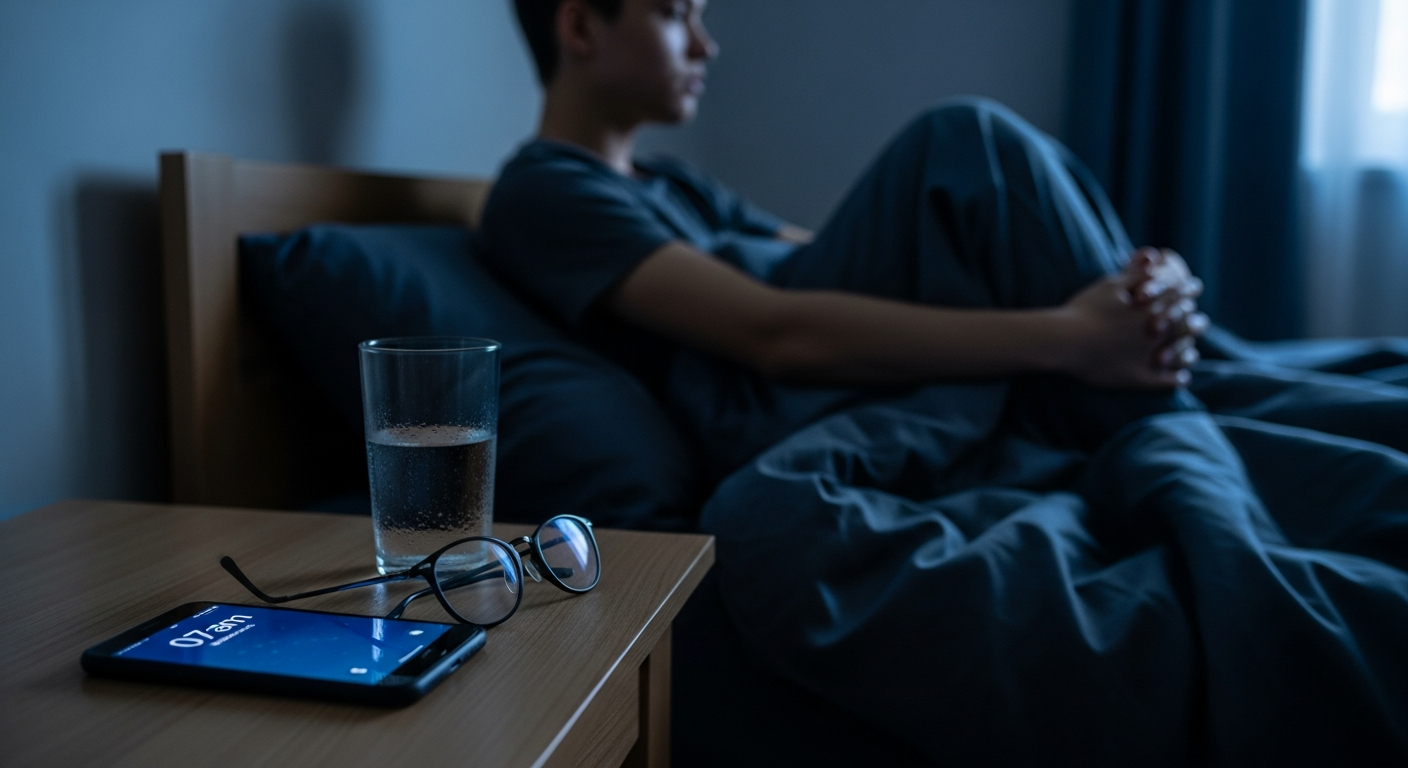
Delayed sleep phase syndrome is a diagnosable circadian rhythm disorder, not a personality trait or bad habit. If you routinely cannot fall asleep before 2am, feel fully alert late at night, and struggle to function before 10am regardless of how many times you set an alarm, you may have a biological clock that runs measurably late, not a discipline problem.
The distinction matters because the management strategies that work for ordinary night-owl tendencies fail completely for true DSPS. Getting the diagnosis right changes everything about what you do next.
DSPS vs Being a Night Owl: Where the Clinical Line Falls
Most people who call themselves night owls simply have a late circadian rhythm preference. Delayed sleep phase syndrome, classified in the International Classification of Sleep Disorders third edition (ICSD-3), requires a chronic, stable delay of the major sleep episode by at least two hours relative to conventional sleep times, persisting for three or more months, combined with inability to advance sleep timing on demand and significant functional impairment during required early wake times.
Prevalence estimates from population studies place true DSPS at roughly 0.17% in adults, though rates climb sharply in adolescents and young adults, reaching 7 to 16% in that group. The AASM recognizes this as a distinct disorder within the circadian rhythm sleep-wake disorder category, separate from social jetlag or voluntary late bedtimes. The diagnostic marker is that the sleep episode itself is normal in architecture and duration once the person sleeps on their own schedule. The pathology is purely one of timing.
Understanding the glymphatic system’s dependency on sleep timing helps explain why chronic misalignment carries real neurological costs beyond daytime fatigue.
The Circadian Genetics Behind a Late Clock
The biological basis of DSPS sits in the suprachiasmatic nucleus (SCN), the master pacemaker in the hypothalamus that drives all downstream circadian outputs. In most people, the intrinsic free-running period of this clock is close to 24.2 hours. In individuals with DSPS, the intrinsic period tends to run longer, sometimes approaching 25 hours, meaning the clock drifts later each day without sufficient corrective light exposure.
Genetic research has identified variants in the PER3 gene, part of the core transcription-translation feedback loop that generates circadian oscillations, as a contributing factor. A longer PER3 polymorphism (the 5-repeat allele) correlates with greater sleep pressure sensitivity and later chronotype. Additional variants in CRY1, which encodes a key clock repressor protein, have been found in familial DSPS cases, explaining why the disorder clusters in families. These are not predispositions you can override by going to bed earlier. They are structural properties of your cellular timekeeping machinery.
DLMO and Why It Defines Your Window for Treatment
The most clinically useful marker of circadian phase is dim light melatonin onset (DLMO), the point at which the pineal gland begins secreting melatonin under low-light conditions. In adults without circadian disorders, DLMO typically occurs around 9 to 10pm. In DSPS, DLMO is shifted 2 to 6 hours later, often falling between midnight and 2am.
This single measurement explains why standard sleep hygiene advice produces so little change. Telling someone with a 1am DLMO to get into bed at 10pm is asking their brain to initiate sleep 3 hours before melatonin has signaled that darkness has arrived. The sleep drive may be adequate, but the circadian gate is closed. Any treatment that does not target the actual phase of the circadian clock, anchored to DLMO, is working around the wrong variable. Home DLMO estimation is possible via saliva test kits, and sleep medicine clinics can measure it directly under controlled conditions.
Why Going to Bed Earlier Does Not Shift the Clock
Forced early bedtimes without phase-shifting interventions do not advance the circadian rhythm. They produce fragmented sleep, increased sleep-onset insomnia, and worsening daytime dysfunction. The clock continues running on its intrinsic schedule regardless of when you lie down.
This is not a motivation failure. Research comparing sleep architecture in DSPS patients sleeping on social schedules versus free-running schedules consistently shows normal sleep efficiency and normal REM distribution when patients sleep on their own biological time. The problem is misalignment, not poor sleep capacity. Forcing misaligned sleep also suppresses slow-wave activity, the restorative stage most closely tied to memory consolidation and metabolic clearance. People with untreated DSPS who regularly wake at 7am for work are effectively accumulating a chronic sleep debt that compounds cognitive impairment over months. If you also find yourself waking at 3am despite exhaustion, that may reflect a secondary cortisol awakening response operating on a misaligned biological schedule.
Evidence-Based Treatment: Light, Melatonin, and Holding the Line
Three interventions have the strongest evidence base for advancing circadian phase in DSPS. First, morning bright light therapy using a lamp rated at 9,000 lux or above, administered within 30 minutes of waking, provides the strongest zeitgeber signal available outside of sunlight. The timing relative to DLMO matters more than the absolute clock time. Administering light during the delay portion of the phase-response curve (roughly the first half of the subjective night) makes phase later, not earlier. Light must land on the advance portion of the curve, which in DSPS means early morning by the patient’s biological reckoning.
Second, low-dose melatonin (0.3 mg, not the 5 to 10 mg doses sold in most pharmacies) taken 5 to 7 hours before DLMO acts as a chronobiotic, shifting the clock earlier without causing sedation at the time of ingestion. The NIH’s National Center for Complementary and Integrative Health notes that lower doses are more physiologically appropriate than high-dose supplementation for circadian applications. Third, once a target sleep-wake schedule is achieved, holding wake time rigidly every day, including weekends, is the maintenance behavior that prevents re-drifting. Chronotherapy, the progressive delay of bedtime by 2 to 3 hours per day until the desired schedule is reached, is occasionally used but requires structured supervision and carries the risk of inducing a free-running state. You may also find value in reviewing how sleep onset physiology interacts with circadian phase when applying these protocols.
Frequently Asked Questions
Is DSPS the same as insomnia?
No. Insomnia involves difficulty initiating or maintaining sleep regardless of schedule. DSPS is a timing disorder: sleep onset and offset are both delayed, but once sleep begins on the person’s natural schedule, it is typically normal in quality and duration. A person with DSPS sleeping from 3am to 11am may have no sleep complaints at all.
Can you outgrow delayed sleep phase syndrome?
Chronotype does tend to advance with age. The late chronotype peak occurs in the late teens and early twenties, and many individuals see gradual advancement through their thirties. However, people with genetically driven DSPS, particularly those with PER3 or CRY1 variants, are unlikely to normalize fully without active chronobiological management.
Does melatonin work for DSPS?
Timed correctly at low doses (0.3 mg, 5 to 7 hours before DLMO), melatonin functions as a phase-advancing chronobiotic and has demonstrated efficacy in clinical trials for DSPS. High-dose melatonin taken at bedtime primarily induces sedation and does not produce meaningful phase advances. The timing and dose are what determine whether it shifts the clock or merely makes you drowsy.
Why does DSPS run in families?
Variants in core clock genes, particularly PER3 and CRY1, are heritable. A 2017 study published in Cell reported a CRY1 missense variant that lengthens the intrinsic circadian rhythm period and was found across multiple generations of affected families. The disorder follows autosomal dominant inheritance patterns in some pedigrees, meaning one copy of the variant is sufficient to produce delayed phase.
If you suspect delayed sleep phase syndrome rather than ordinary late-night preference, the right starting point is a formal chronobiology assessment, not another attempt at better sleep discipline. The AASM maintains a directory of accredited sleep medicine centers where circadian evaluation, including DLMO testing, is available.
Medically reviewed by Dr. Marcus Reid. Last reviewed: May 2026. Educational, not personalized medical advice.