
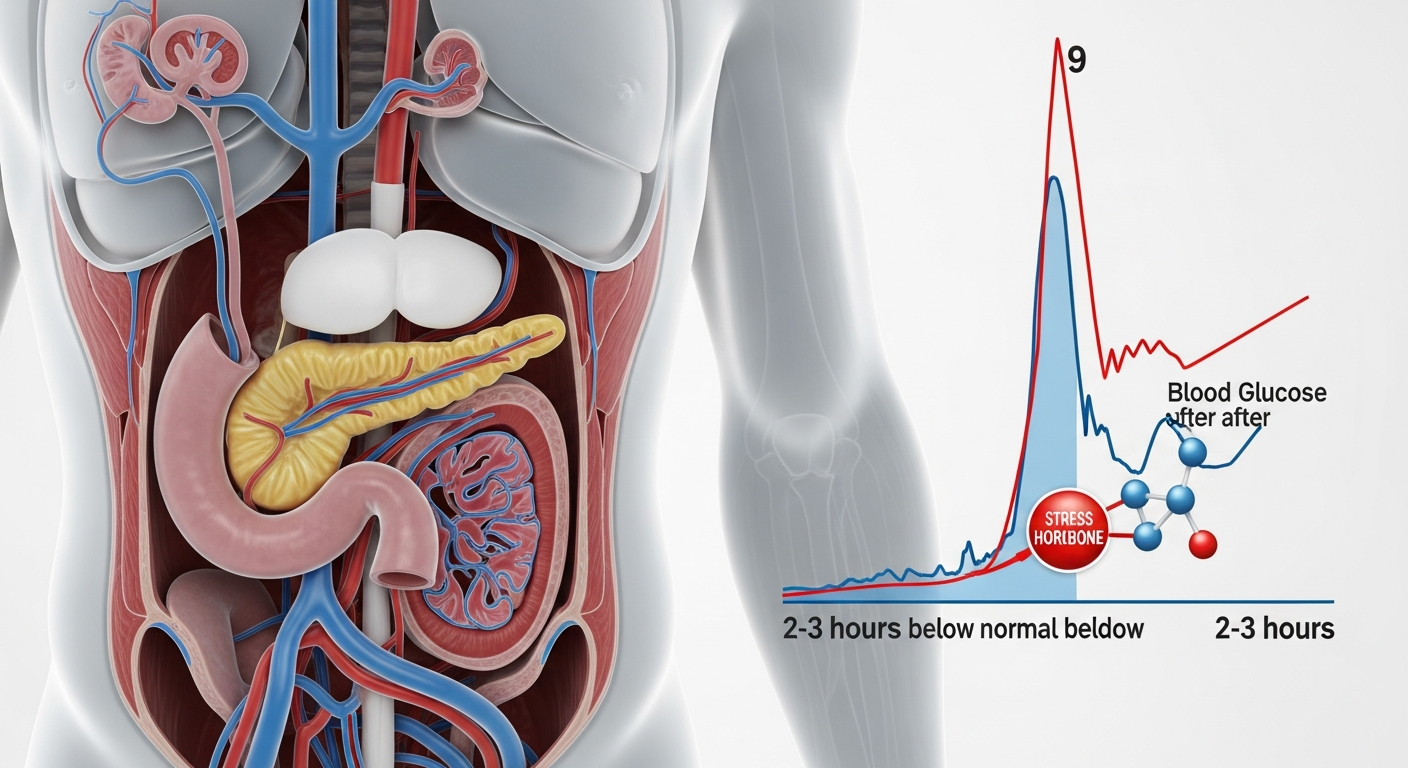
Your heart is pounding, your hands are shaking, and a wave of inexplicable dread has just hit you two hours after lunch. If your doctor has cleared you for anxiety and the standard treatments are not working, the problem may be in your bloodstream, not your brain. Reactive hypoglycemia produces a biochemical stress response that is, physiologically, nearly identical to a panic attack — and it goes undiagnosed in a significant portion of people seeking anxiety treatment.
What Reactive Hypoglycemia Actually Is
Reactive hypoglycemia is a postprandial glucose crash that occurs two to five hours after eating, typically when blood sugar drops to or below 70 mg/dL. Unlike fasting hypoglycemia (which signals serious pathology), the reactive form is triggered by an exaggerated insulin response to carbohydrate intake. You eat, your pancreas overshoots, and your blood sugar falls faster than your body can compensate.
This is not a diabetes diagnosis. Many people with reactive hypoglycemia have completely normal fasting glucose and HbA1c readings, which is exactly why it slips through routine blood panels. The National Institute of Diabetes and Digestive and Kidney Diseases classifies reactive hypoglycemia as a distinct syndrome with its own diagnostic criteria, separate from diabetic hypoglycemia. The threshold for symptoms varies by individual — some people feel nothing at 65 mg/dL; others are symptomatic at 75 mg/dL, which is technically within normal range. That variability is part of why this condition is so frequently missed.
Why It Feels Exactly Like a Panic Attack
The moment your blood glucose drops too far, your body treats it as an emergency. The adrenal glands release a surge of adrenaline (epinephrine), and the hypothalamic-pituitary-adrenal axis simultaneously pushes out cortisol to mobilize stored glucose. This counter-regulatory hormone cascade is your body’s mechanism for pulling glucose back into circulation — but the physical side effects are indistinguishable from a panic attack.
Tachycardia, diaphoresis (sudden sweating), fine motor tremor, chest tightness, paresthesia in the hands and face, and a pervasive sense of dread or unreality all follow from that same adrenaline surge, regardless of whether the trigger was a threat or a blood sugar crash. Research published in Frontiers in Endocrinology has documented that hypoglycemia-induced epinephrine release produces symptom profiles that overlap with panic disorder in over 60% of cases. If you have ever felt sudden anxiety after a sugary meal, that timing is the diagnostic tell most clinicians overlook. You can also cross-reference this with the cortisol awakening response, which drives a similar adrenaline-forward stress state, but in the early morning hours instead of after meals.
Who Gets Reactive Hypoglycemia
Four populations show up disproportionately. Post-bariatric surgery patients are among the most affected, because altered GI anatomy accelerates gastric emptying and causes rapid glucose absorption followed by an exaggerated insulin spike, a phenomenon called post-bariatric hypoglycemia. People in the pre-diabetic, insulin-resistant range are next — their beta cells have become hyperreactive and secrete excess insulin even in response to moderate carbohydrate loads.
High-glycemic eaters who habitually consume refined carbohydrates (white bread, sweetened drinks, processed cereals) train their pancreas toward chronic oversecretion. Finally, a meaningful subset has idiopathic reactive hypoglycemia: no bariatric history, normal insulin sensitivity markers, yet reproducible postprandial crashes. Depersonalization and derealization symptoms are common in this group, because the brain is acutely sensitive to glucose drops and responds with the same detachment response it uses under extreme stress. Anxiety disorders, alcohol use history, and certain beta-blockers (which blunt the body’s glucose recovery signals) also raise risk.
How to Confirm It Versus Anxiety
A standard anxiety panel will not catch this. The gold-standard diagnostic is a mixed-meal tolerance test (MMTT) — you consume a standardized liquid meal and have blood glucose drawn every 30 minutes for five hours. A drop to below 70 mg/dL concurrent with symptoms satisfies the diagnostic criteria laid out by the Endocrine Society’s clinical practice guidelines on hypoglycemia.
A continuous glucose monitor (CGM) is increasingly the practical tool of first resort. Wearing a CGM for two weeks while logging meals, symptoms, and timing creates a clear pattern map. If every symptomatic episode correlates with a postprandial glucose nadir, you have functional confirmation. A food-and-symptom journal serves the same purpose with lower precision — record everything you eat, then note the exact time symptoms appear. The globus pharyngeus sensation (the tight-throat feeling often attributed to anxiety) can also coincide with glucose crashes, which adds another data point when mapping your journal entries.
The Evidence-Based Fix
Eating order matters more than most people realize. A 2023 study in Diabetes Care (Shukla et al.) found that consuming protein and fat before carbohydrates at the same meal blunted the postprandial glucose peak by up to 37% compared to carbohydrate-first eating. That smaller peak means a smaller insulin overshoot and a shallower crash.
Beyond eating order: reducing overall glycemic load (replacing refined carbs with whole grains, legumes, and non-starchy vegetables), eating smaller portions every three to four hours rather than three large meals, and ensuring adequate magnesium intake (400 mg elemental magnesium daily has been shown to improve insulin sensitivity in magnesium-deficient adults) are the evidence-supported interventions. CGM use during the dietary adjustment phase gives you real-time feedback on which specific foods trigger your personal glucose valleys, making the protocol significantly more precise than generic low-glycemic guidelines. Trial and adjustment over four to six weeks is typically enough to determine whether dietary modification alone resolves the anxiety-like episodes.
Frequently Asked Questions
Is reactive hypoglycemia the same as diabetes?
No. Reactive hypoglycemia is a separate condition from diabetes. Most people who have it show normal fasting glucose and HbA1c levels. The problem is an exaggerated postprandial insulin response, not a chronic inability to regulate blood sugar. It does not automatically progress to diabetes, though insulin resistance (a shared risk factor) can appear in both conditions.
Why does a crash happen three hours after eating?
After a high-carbohydrate meal, blood glucose peaks within 30 to 60 minutes. An oversecretion of insulin then drives glucose below the normal range, typically two to four hours after the meal. The timing depends on gastric emptying rate, carbohydrate type, and individual insulin sensitivity. Three hours is the most common window, but some people crash as early as 90 minutes or as late as five hours post-meal.
Can reactive hypoglycemia cause a real panic disorder over time?
Repeated episodes of hypoglycemia-induced adrenaline surges can sensitize the fear response. Some researchers believe chronic, undiagnosed reactive hypoglycemia may contribute to the development of true panic disorder through repeated HPA axis activation. Resolving the glucose pattern first is essential before concluding that panic disorder is purely psychological in origin.
Does a CGM actually help diagnose this at home?
A CGM is currently the most practical tool for self-diagnosis confirmation. It captures your glucose curve in real time, including the nadir that occurs between meals. When a symptomatic episode maps precisely to a glucose reading below 70 mg/dL on the CGM trace, that correlation is clinically meaningful data to bring to your physician for follow-up with a formal mixed-meal tolerance test.
If your anxiety appears on a predictable schedule after meals and standard anxiolytics have not worked, checking your glucose is a low-cost, high-yield next step.
Medically reviewed by Dr. Marcus Reid. Last reviewed: May 2026. Educational, not personalized medical advice.