
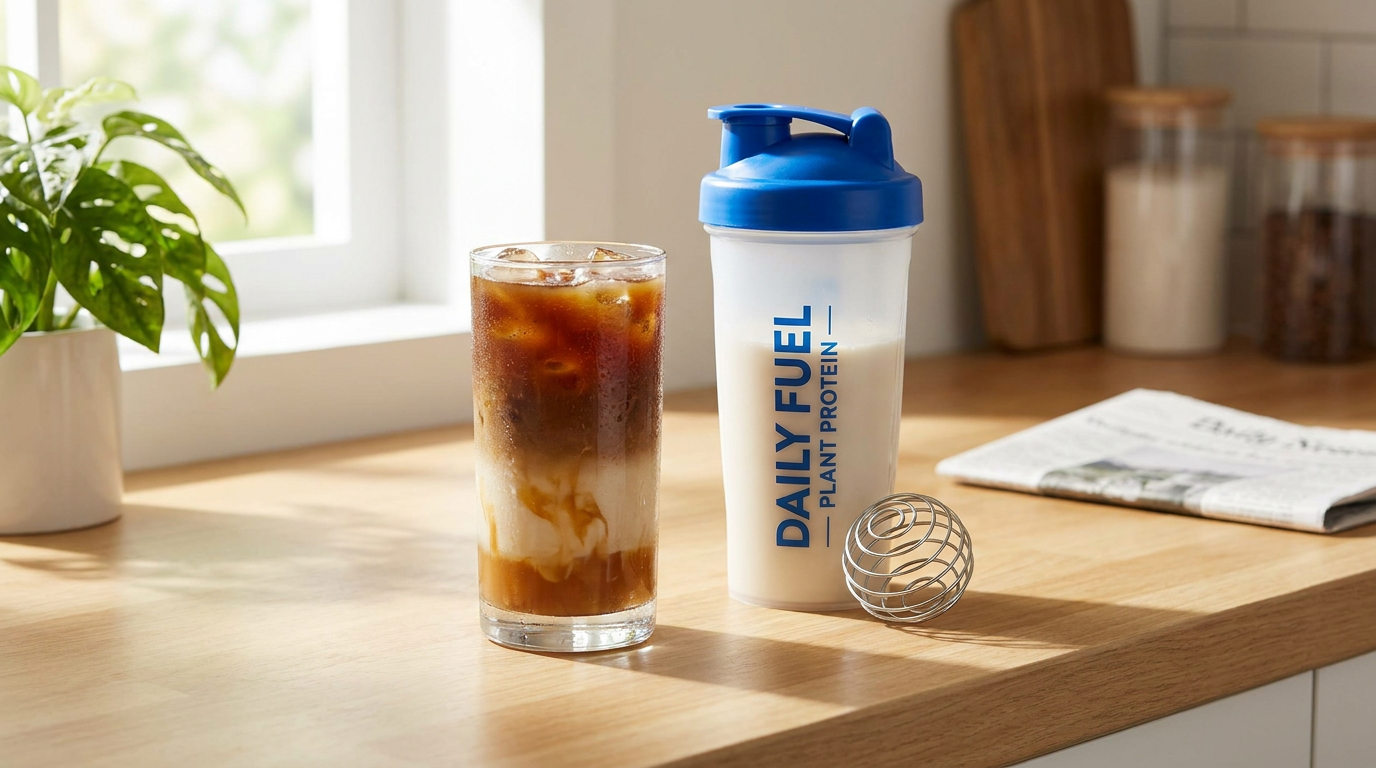
Protein coffee is exactly what it sounds like: coffee mixed with a protein source, usually protein powder or collagen, so a caffeine ritual doubles as a small meal. The most common version, often called “proffee,” blends cold brew with a scoop of vanilla or chocolate protein shake. It went from gym-fridge hack to an actual menu item at chains like Starbucks, and that jump is what turned a niche trick into a search term with real volume.
What Counts as Protein Coffee
There are three common builds. The first is cold brew shaken with a pre-made protein shake, the TikTok-era proffee. The second is hot coffee stirred with vanilla or unflavored protein powder, closer to a protein latte. The third is a bottled version, usually cold brew with added whey or plant protein and sweetener already mixed in.
None of these need special equipment. A shaker bottle or milk frother handles the mixing.
Why It Went From Gym Bags to Coffee Shop Menus
Two things pushed protein coffee into the mainstream. Protein-forward eating became a broader food trend, not just a bodybuilding habit, and ready-to-drink shakes got better tasting, so blending them into coffee stopped feeling like a chore.
Coffee chains noticed. Add-on protein shots and protein cold foam started showing up as menu options rather than off-menu requests, which pushed the phrase “protein coffee” from a fitness forum term into something people search before ordering.
How People Actually Make It at Home
The simplest version is a scoop of whey or plant protein shaken with cold brew and ice. People who want a smoother texture blend it instead, since a blender breaks up clumps a shaker sometimes leaves behind.
Collagen peptides are a popular swap for anyone who finds whey too heavy or sweet. Collagen has almost no flavor and dissolves easily in hot coffee, though it will not foam the way whey-based protein cold foam does.
Some people skip powder entirely and pour brewed coffee over a pre-made protein shake, closer to what most shops sell bottled.
What Nobody Tells You About the Downsides
Protein powder and coffee do not always mix cleanly. Some proteins curdle slightly in hot, acidic coffee, which is why cold brew is the more forgiving base. Texture, not taste, is usually the first complaint from anyone trying it for the first time.
Bottled and canned versions vary a lot in what else is in the can. Some lean on added sugar or flavored syrup to cover the taste of the protein, so the drink ends up less simple than a shaker bottle version made at home.
This is general information, not a recommendation for a specific amount of protein or caffeine. If you have a health condition or take medication, check with a doctor before making protein coffee a daily habit.
Where It Fits With Other High Protein Habits
Protein coffee tends to show up alongside other high protein swaps people are already making, from protein bars stashed in a bag to high protein snacks bought at the store for a quick refuel between meals. If mornings are the tight spot in your routine, a protein snack drawer at work pairs naturally with a protein coffee habit, since both solve the same problem of getting enough protein without a full meal.
Frequently Asked Questions
Is protein coffee the same thing as proffee?
Proffee usually refers to the cold brew and protein shake version specifically. Protein coffee is the broader term that covers hot, cold, homemade, and bottled versions.
Can you add protein powder to hot coffee?
Yes, though some proteins clump or curdle slightly in hot, acidic coffee. Vanilla whey and collagen tend to dissolve more smoothly than unflavored plant protein blends.
Does protein coffee replace a protein shake?
It can, since the protein source is usually the same powder or shake people already drink separately. The main difference is combining it with coffee instead of drinking each one on its own.