
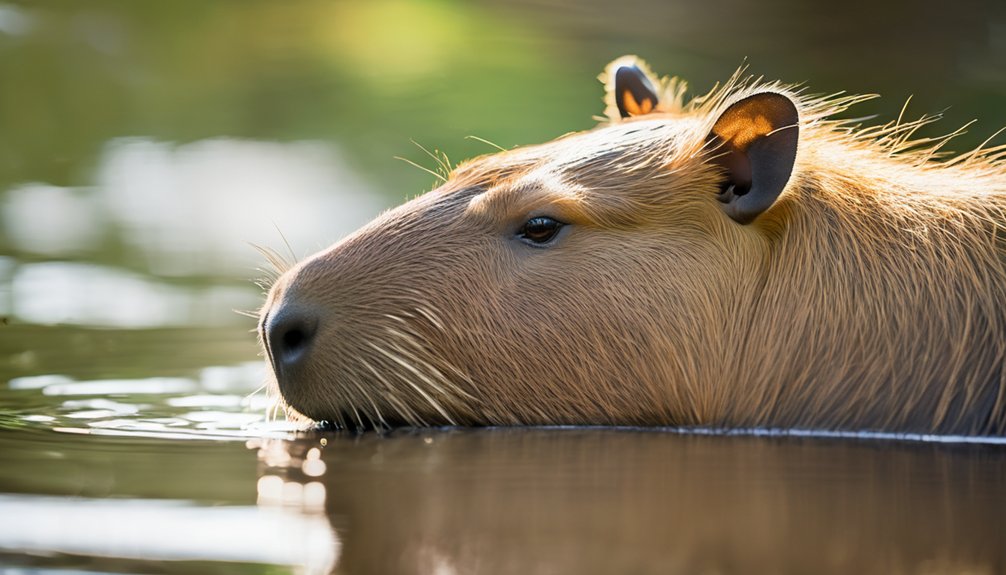
You’ll find capybaras calm due to their social structure, where clear hierarchies reduce conflict and promote group harmony. Their physiological traits, such as slow heart rates and calming hormones, help maintain relaxation. Adaptations like buoyant bodies and webbed feet allow quick water escapes, reducing stress. Alert group vigilance balances calmness with safety, while their gentle nature supports peaceful interactions with other animals and humans. Exploring these factors reveals how their biology and behavior align for tranquility.
Social Structure and Group Dynamics
Although capybaras are often seen in groups, their social structure is quite organized and plays an important role in their survival. You’ll notice a clear social hierarchy within these groups, where dominant individuals lead and maintain order. This hierarchy reduces conflict and promotes stability, allowing members to coexist peacefully.
Group bonding is significant, too; capybaras engage in grooming and close physical contact to strengthen relationships. These interactions foster trust and cooperation, which help the group respond effectively to threats.
Understanding this social system reveals how capybaras balance freedom with the structure needed for their well-being.
Adaptations to Aquatic Environments
Capybaras rely on their social behaviors to navigate threats, but their ability to thrive also depends heavily on physical traits suited for aquatic life.
You’ll notice three key adaptations that set them apart:
- Buoyant bodies help capybaras float effortlessly, conserving energy while swimming or resting in water.
- Webbed feet enhance their swimming agility, allowing quick escapes and efficient movement through wetlands.
- Nostrils and eyes positioned high on their heads enable you to keep watch above the waterline while staying mostly submerged.
These adaptations grant capybaras freedom to exploit aquatic environments safely and effectively.
Physiological Traits That Promote Relaxation
When you observe capybaras, you’ll notice that their bodies possess several physiological traits specifically designed to promote relaxation and reduce stress.
Their slow heart rate and efficient respiratory system help regulate energy use, supporting calmness even in fluctuating environmental factors. Additionally, capybaras produce calming hormones like oxytocin, which enhances social bonding and stress reduction.
Their dense fur provides insulation, helping maintain stable body temperature and further limiting stress from external conditions.
These physiological adaptations work together to create a state of relaxed alertness, enabling capybaras to navigate their surroundings with minimal anxiety or tension.
Natural Predators and Defense Mechanisms
Understanding how capybaras stay calm and alert helps explain their responses to threats in the wild. Their natural defense mechanisms focus on predator avoidance and natural camouflage.
You’ll notice they:
- Blend seamlessly into grassy or watery environments, using their brownish fur as natural camouflage.
- Stay close to water, allowing a quick escape by diving if danger appears.
- Rely on group vigilance, where each capybara watches for predators, alerting others when necessary.
These strategies let capybaras maintain calmness while effectively managing risks from natural predators, preserving their freedom in open habitats.
Interaction With Humans and Other Species
Although capybaras primarily inhabit natural environments, their interactions with humans and other species have become increasingly significant.
You’ll notice that capybaras often display calm behavior during human interaction, which helps foster trust and coexistence. Their gentle nature encourages positive interspecies relationships, allowing them to integrate well with various animals like birds, monkeys, and even domestic pets.
Frequently Asked Questions
How Long Do Capybaras Typically Live in the Wild?
You’ll find a capybara lifespan in the wild typically lasts around 6 to 10 years. Their wild survival depends on freedom, social bonds, and adapting to their environment, letting them live peacefully and thrive naturally.
What Do Capybaras Eat Besides Aquatic Plants?
Besides aquatic plants, capybaras eat grasses, fruits, and bark. Their capybara diet includes various food sources, giving them freedom to thrive in diverse environments while staying nourished and balanced in the wild.
How Do Capybaras Communicate With Each Other?
You’ll notice capybaras use various vocalizations—like purrs, barks, and whistles—to navigate social interactions. These sounds help them express emotions, warn of danger, and strengthen bonds, keeping their community free and connected.
Are Capybaras Nocturnal or Diurnal Animals?
Capybaras show diurnal habits, so you’ll find them active during daylight. They don’t follow strict nocturnal behavior, giving you freedom to observe them basking and socializing under the sun, embracing their calm daytime rhythm.
Can Capybaras Be Kept as Pets Legally?
You can keep capybaras as pets, but capybara ownership laws vary widely. You’ll need to research local regulations and prepare for unique pet care considerations, ensuring you provide a spacious, social, and water-friendly environment for them.