

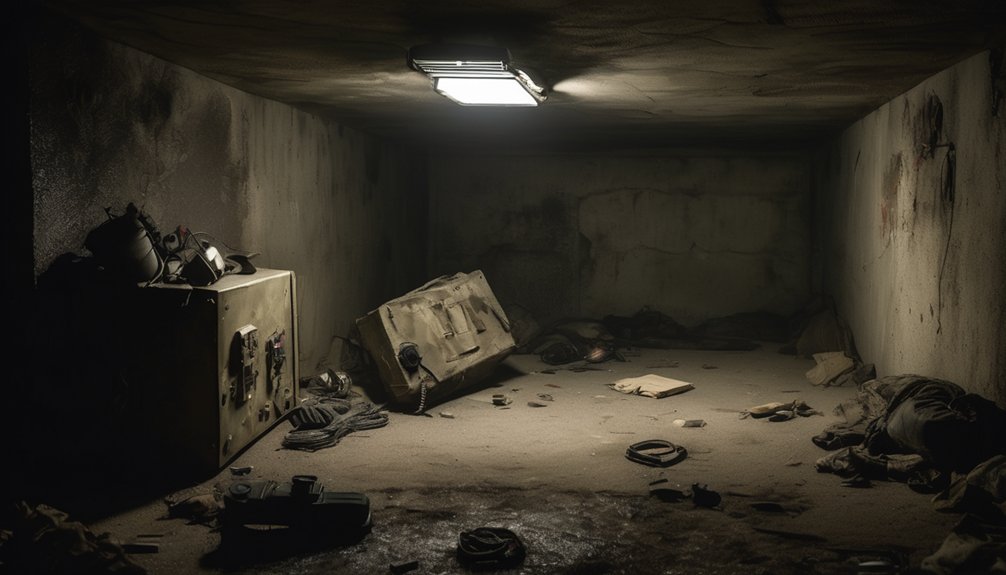
You’ll find Saddam Hussein’s final hideout, the “Spider Hole,” was a modest, underground shelter designed for secrecy and security. Photographic evidence shows limited furnishings and concealed entrances, highlighting strategic simplicity to avoid detection. Advanced measures like false walls and surveillance devices were in place despite scarce resources. This hideout exemplifies his attempt to evade capture amidst tight security. Exploring further reveals how these details influenced regional politics and the broader implications of his capture.
Overview of Saddam Hussein’s Final Hideouts
Although Saddam Hussein tried to remain hidden after the fall of his regime, he used several well-chosen locations to evade capture.
You should understand that Saddam’s lifestyle influenced his choice of hideouts, which balanced secrecy with access to loyal supporters.
The hideout conditions varied, but they were generally modest to avoid attention, often underground or in remote areas.
These locations lacked luxury but provided essential security features.
The “Spider Hole” Discovery and Its Significance
Saddam Hussein’s final hideouts reflected his efforts to stay elusive, but none became as well-known as the “Spider Hole.”
This small, concealed underground hideout gained worldwide attention when U.S. forces discovered it in December 2003.
You see, the spider hole’s tactical significance lay in its design—compact, hidden, and difficult to detect—allowing Saddam to evade capture for months.
For those who value freedom, understanding this hideout highlights the lengths oppressive figures go to avoid accountability.
The discovery marked a turning point, symbolizing the end of a regime and reinforcing the importance of vigilance in securing liberty.
Analysis of Photo Evidence From the Hideout
When examining the photo evidence from the hideout, you’ll notice several key details that reveal how the space was used and maintained.
Through careful photo analysis, you can interpret signs of limited resources and the confined living conditions present. The images show basic furnishing and minimal personal effects, indicating a focus on concealment rather than comfort.
Evidence interpretation highlights the strategic simplicity and the necessity to remain undetected. These details provide insight into the hideout’s function and the life lived within it, helping you understand the practical realities behind the space without speculation.
Security Measures and Concealment Techniques Used
Because the hideout needed to remain undiscovered, its security measures and concealment techniques were carefully planned and implemented.
You’ll notice that the hiding techniques involved using natural terrain and reinforced structures to minimize detection. Advanced security systems, including surveillance cameras and motion sensors, were installed to monitor any approach.
Access points were concealed behind false walls and hidden entrances, making unauthorized entry difficult. These combined efforts created a secure environment that effectively shielded the location from external threats.
Understanding these methods highlights how strategic planning can maintain secrecy, especially when freedom and safety depend on remaining unseen.
Impact of the Capture on Regional and Global Politics
Although the capture marked a significant turning point, its effects rippled through both regional and global politics in complex ways.
You’ll see that regional stability faced new challenges as power vacuums emerged, prompting shifts in alliances. Global diplomacy took on fresh urgency, with nations reassessing their strategies to promote peace and security. Understanding these impacts helps you grasp the broader consequences.
- Increased focus on rebuilding regional stability
- Heightened international cooperation in counterterrorism
- Reevaluation of diplomatic relations across the Middle East
These factors shaped the political landscape you observe today.
Frequently Asked Questions
How Long Did Saddam Hussein Stay in the Spider Hole?
Saddam stayed in the spider hole for about seven months. By studying Saddam’s escape and hiding strategies, you can learn how determination and patience play vital roles when seeking freedom against all odds.
Who First Discovered the Hiding Place?
You’ll find that U.S. soldiers first discovered the hiding place, uncovering Saddam’s clever hiding techniques. The discovery details reveal how freedom fighters exposed his secret, symbolizing triumph over tyranny and the relentless pursuit of liberty.
What Happened to Saddam Hussein After His Capture?
After Saddam’s capture, you’ll see he faced a trial where justice sought freedom’s truth. His post-capture life ended with execution, reminding you that accountability matters when you cherish liberty and a world free from tyranny.
Were There Any Items of Personal Significance Found in the Hideout?
Yes, you’ll find personal belongings and significant artifacts in the hideout that reveal Saddam’s life and mindset. These items offer insight into his resistance and the struggle for freedom that many still seek today.
How Did Saddam’s Family React to His Capture?
You’d see Saddam’s family emotions mixed with shock and despair when hearing about his capture. Their capture reactions showed grief and fear, but also a quiet hope for freedom from years of turmoil and oppression.

