
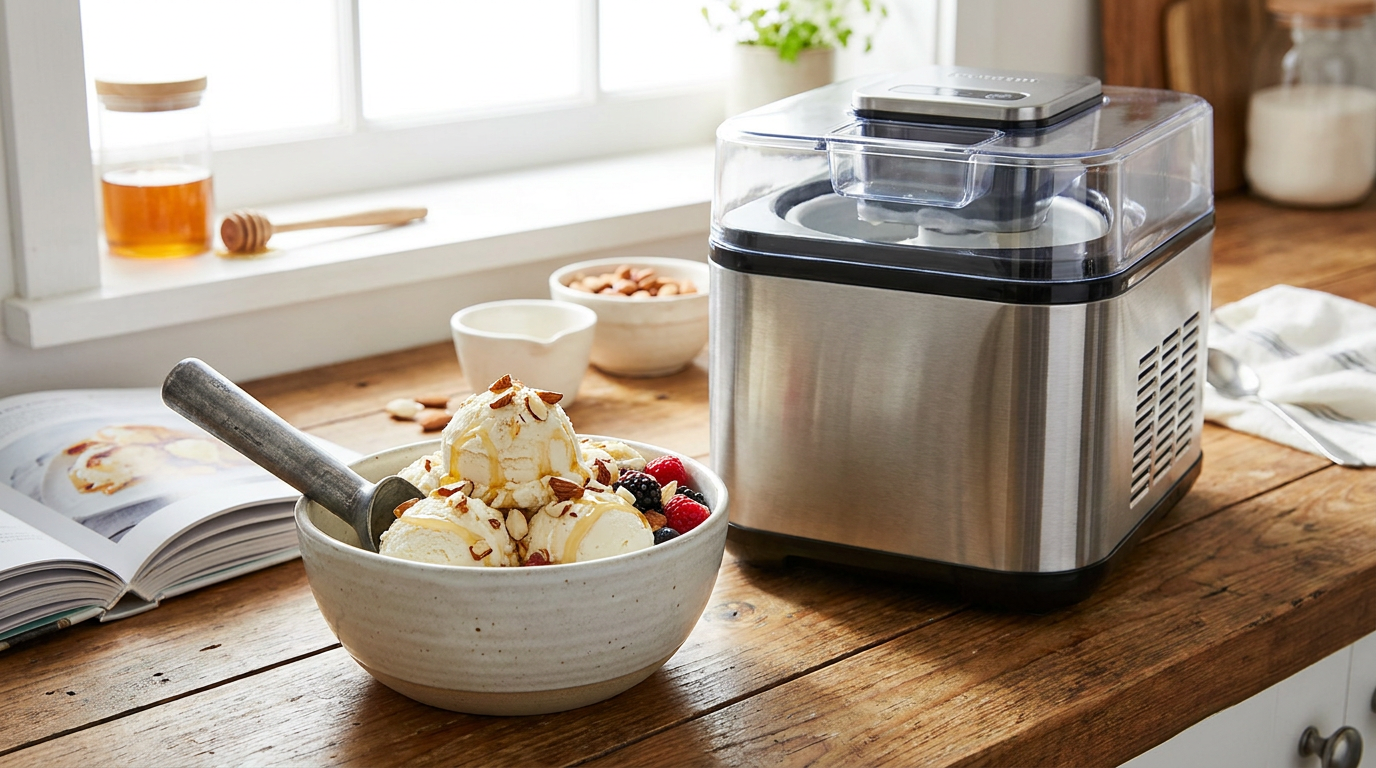
Protein ice cream in the Ninja Creami works, but the result depends on what you freeze before you spin it. Get the base right and you land close to soft-serve texture. Skip the prep and you get a hard, crumbly puck that needs a second pass to fix.
Here is what actually changes the outcome: the powder, the liquid ratio, the sweetener, and the re-spin.
Does Protein Ice Cream Actually Work in the Ninja Creami?
Yes, and it is one of the more popular uses for the machine. Freeze a liquid base solid for at least 24 hours, and the machine shaves it into a soft, scoopable texture instead of a rock-hard block. A base that is too thin freezes icy, and too much protein powder freezes dense and grainy. The machine cannot rescue bad math, only smooth out a reasonable one.
Picking a Protein Powder That Won’t Turn Icy or Chalky
Whey isolate blends smoother than whey concentrate since it carries less fat and lactose. Casein thickens as it sits, so that base turns denser overnight compared to whey, and a single-source pea powder often turns grittier than a pea-and-rice blend. Piling in extra scoops to push the protein count higher usually backfires, since powder soaks up liquid and leaves you with a chalkier result.
The Liquid Base Matters More Than the Powder
Milk, a milk alternative, or thinned yogurt gives the Creami enough fat and body to shave into something creamy, since water-based bases freeze icier. A common starting ratio is one to one and a half cups of liquid per scoop of powder, adjusted after the first batch. Too little concentrates the powder into chalkiness, too much leaves you with a protein slushie instead of ice cream.
Why the Re-Spin Function Fixes Crumbly Results
If the first spin comes out dry or full of ice crystals instead of smooth, that is what the re-spin cycle addresses. A second spin breaks down larger crystals and redistributes moisture, turning a crumbly attempt into something scoopable, especially with a small splash of milk added before that second pass rather than spinning it dry again.
Sweeteners and Add-Ins Without Wrecking Texture
Liquid sweeteners like monk fruit drops or maple syrup mix in more evenly than granular ones, which leave gritty pockets once frozen, the same logic that applies to protein ice cream brands that actually taste good. Mix-ins go in after the spin, not frozen inside the base: chocolate chips and peanut butter swirl survive the churn blade better folded in at the end.
Setting Realistic Expectations vs Store-Bought Pints
Homemade protein ice cream rarely matches a commercial pint’s density, since brands use stabilizers a home kitchen cannot replicate. Expect soft-serve on the first spin. If that feels like more troubleshooting than you want, ready-made pints are a fair fallback: the same rule from what separates a good protein bar from a forgettable one applies, check the ingredient list before the protein number. Treat this as a planned treat, not a daily habit, and rotate it with high protein snacks that do not taste like cardboard so dessert is not carrying your protein target alone.
Frequently Asked Questions
Do you need a Ninja Creami to make protein ice cream, or will a regular blender work?
A regular blender cannot replicate the shaving action behind the Creami’s soft-serve texture. You can freeze a protein base without the machine, but it comes out as a hard block, not something scoopable.
Why did my protein ice cream come out powdery instead of creamy?
Powdery texture usually means too much protein powder relative to liquid, or a base that needed a re-spin and only got one pass. Re-spinning with a splash of added liquid fixes it.
Can you use protein powder you already have, or do you need a specific brand?
Whatever whey isolate or smooth plant blend you already use will likely work, since the liquid ratio and re-spin matter more than the brand.