
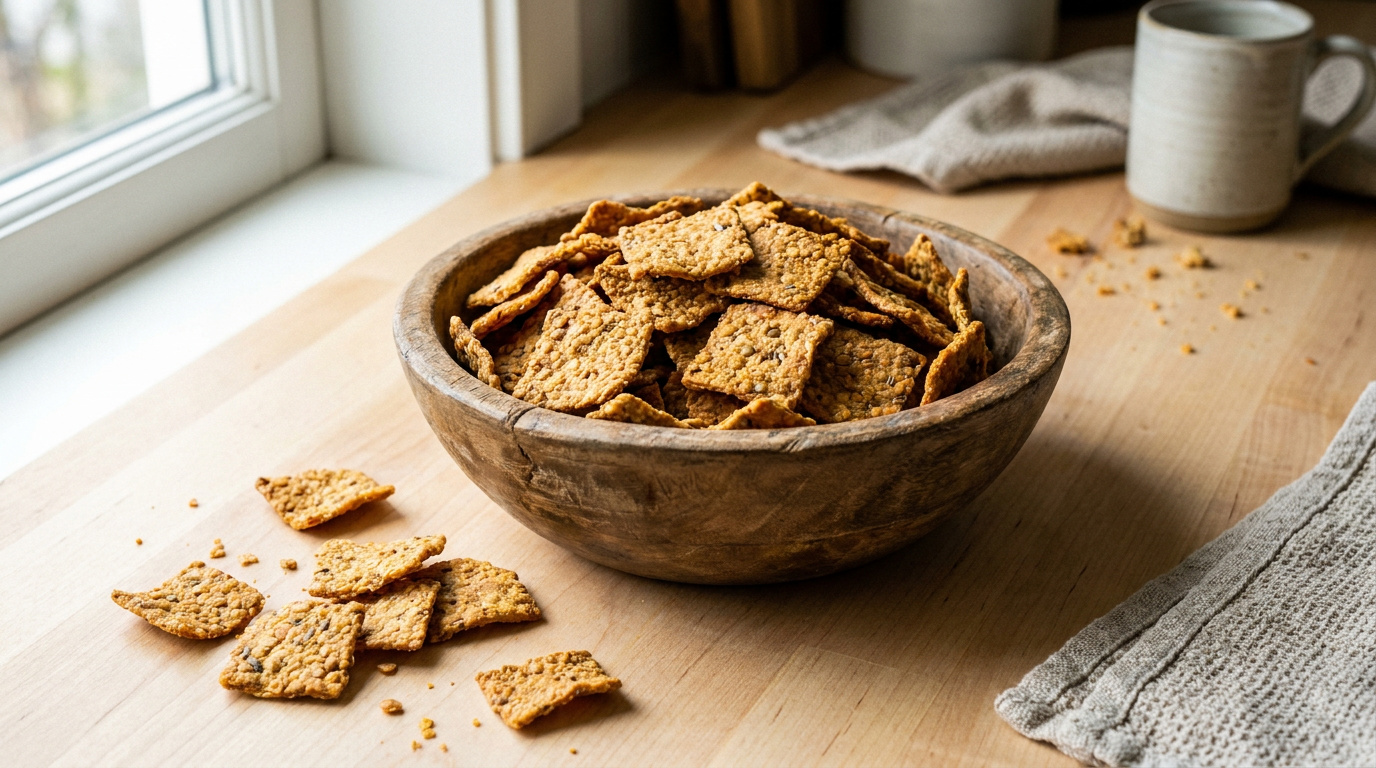
Protein chips are a legume or pea-based crisp built to deliver more protein per bag than a regular potato chip, without losing the crunch. They land somewhere between a chip and a cracker, and whether that trade works depends on what you want from a snack.
This review breaks down what protein chips actually taste like, how they hold up next to other high-protein snacks, and where they earn a real spot in your rotation.
What Are Protein Chips Made Of
Most brands build protein chips from a base of pea protein, lentil flour, or chickpea flour, sometimes blended with whey isolate for an extra boost. The result is baked or fried into a thin, ridged chip that mimics a tortilla or potato chip.
Because the base ingredient is a protein source instead of a starch, the chip carries more protein per serving than a standard snack while using less oil overall. That is the entire pitch of the category.
Do Protein Chips Actually Taste Like Chips
Texture is where opinions split hardest. Pea and lentil based chips tend to be denser and slightly grainier than a potato chip, with a snap instead of a shatter.
Whey-based versions lean crispier and closer to a traditional chip, but they can carry a faint milky aftertaste under bold seasonings like barbecue. Neither version fools you into thinking it is a regular chip, but the better brands get close enough that you stop noticing after a few bites.
How Do They Compare to Other High-Protein Snacks
Protein chips solve a specific problem: they satisfy a craving for something salty and crunchy while still contributing to your daily protein target. That puts them in a different lane than sweeter options.
If you already lean on protein bars for portability, chips fill the savory gap those bars cannot. If weight management is the goal, it helps to see how chips stack up against other high protein snacks for weight loss before you commit a grocery budget to them.
Are Protein Chips Actually a Better Chip
Better depends on what you are optimizing for. Gram for gram, protein chips beat a standard potato chip on protein content and often carry less fat per serving, which matters if you track macros closely.
They are not automatically a low-calorie food, and portion sizes still matter. Treat them as a smarter swap for the same craving, not a free pass to eat the whole bag.
When Protein Chips Make Sense in Your Routine
They work best as a between-meal bridge, something to keep your energy steady without reaching for something sugary. Pair a serving with a small handful of nuts or a piece of fruit for a more complete snack.
If you already keep a stocked protein snack drawer for work, protein chips are worth rotating in alongside bars so you are not eating the same texture every day.
What to Check Before You Buy a Bag
Read the ingredient list before the marketing claim on the front. Some “protein chips” lean more on rice or corn flour than protein sources, with only a modest bump over a regular chip.
Sodium also climbs fast in bold flavors, so compare labels across a few brands rather than grabbing the first bag you see. This is general nutrition guidance, not medical advice.
Frequently Asked Questions
Are protein chips healthier than regular potato chips?
They generally offer more protein and less fat per serving, but sodium and calorie counts vary a lot by brand, so check the label rather than assuming every bag is a clean upgrade.
Do protein chips taste like cardboard?
The better-formulated brands do not. Expect a denser, slightly grainier crunch than a potato chip rather than a bland or chalky bite.
Can protein chips replace a protein bar?
They serve a different craving. Chips satisfy salty and crunchy cravings while bars work better for sweeter, more portable fuel, so most people end up using both.