
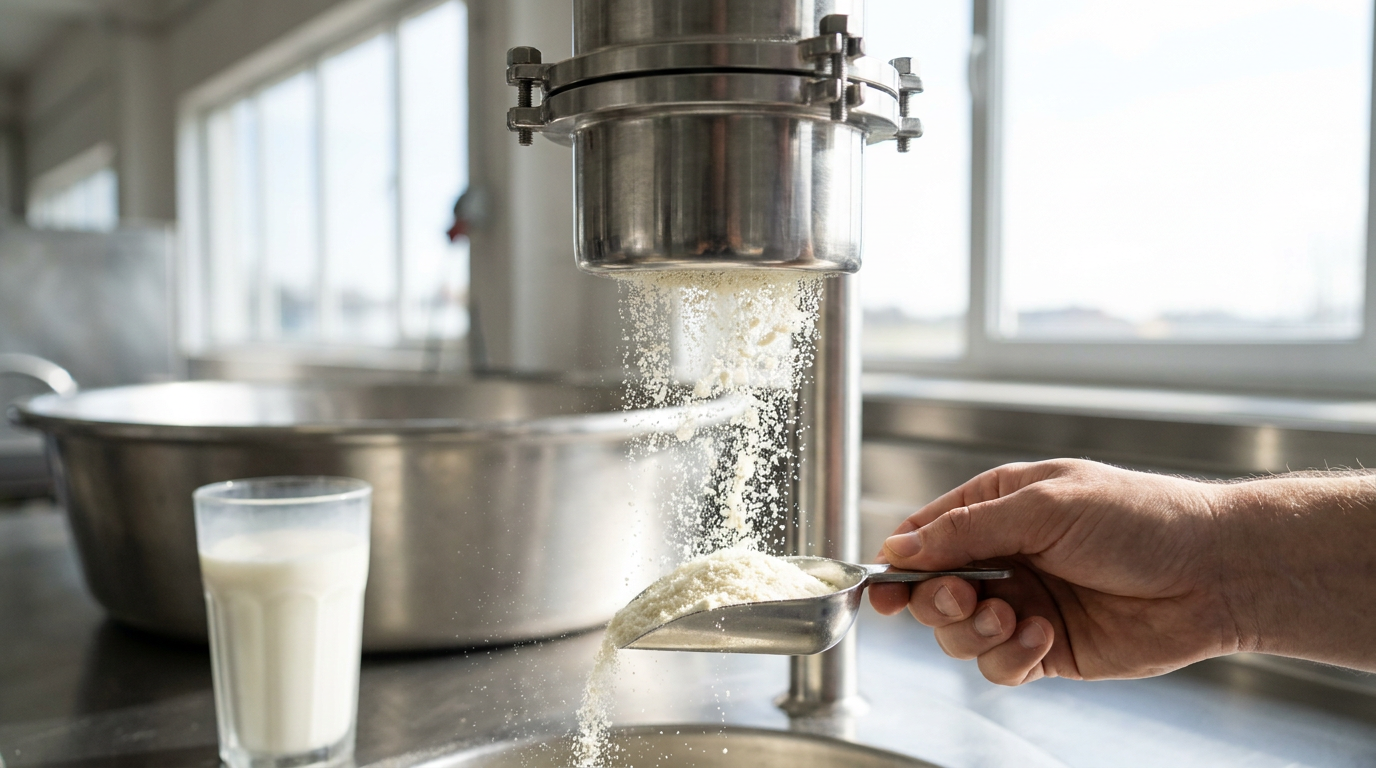
Protein powder starts as leftover liquid from cheese making, not as something scooped out of a lab. That liquid, called whey, gets filtered, dried, and sometimes broken down further before it ever reaches a tub. Once you see the steps in order, the difference between concentrate, isolate, and hydrolysate stops being a marketing puzzle.
Where the Protein Actually Comes From
Whey is the watery byproduct left over when milk is turned into cheese. Dairy plants used to dump it. Someone eventually noticed it was full of protein, and an entire supplement category grew out of what used to go down the drain.
Casein, the other major dairy protein, comes from the same milk but separates out differently during curdling. It digests slower than whey, which is why some brands sell it as a nighttime formula instead of a post-workout one.
How Raw Whey Gets Filtered Into Powder
Raw liquid whey is mostly water, lactose, and minerals, with protein making up a smaller share. Processors run it through membrane filtration, pushing the liquid through progressively finer filters that separate protein molecules from everything else.
The filtered liquid then goes through a dryer, usually a spray dryer that mists it into a hot chamber so the water evaporates almost instantly. What lands at the bottom is the fine powder you recognize from the tub, before flavoring or sweeteners get mixed in.
Why Concentrate, Isolate, and Hydrolysate Taste and Digest Differently
Concentrate goes through the least filtration, so it keeps more lactose and fat, which is part of why it tastes creamier to a lot of people. It is also usually the cheapest version on the shelf.
Isolate gets filtered further to strip out most of the remaining lactose and fat, leaving a higher percentage of protein by weight. That extra filtration step is the main reason isolate costs more than concentrate.
Hydrolysate takes it a step further and pre-breaks the protein into smaller chains using enzymes, before it even reaches your stomach. Manufacturers market this as faster absorption, though it also tends to taste more bitter, which is why it shows up less often in flavored consumer tubs.
How Plant-Based Powder Skips the Dairy Step Entirely
Pea, rice, and soy protein powders start with the whole plant or legume instead of milk. Processors isolate the protein through a wet or dry milling process, separating it from starch and fiber rather than from lactose and fat.
Because no single plant protein has the full amino acid profile that dairy protein has, a lot of plant-based tubs blend two or more sources, like pea and rice, to round out the profile before drying and packaging.
What Happens Before It Reaches the Scoop
After drying, the base powder gets tested, blended with flavoring and sweeteners, then packed into the tub. Quality control at this stage checks protein content and screens for contaminants before anything ships to a shelf.
If you like tracking exactly what goes into what you eat, the same “what is actually in this” mindset applies to protein bars ranked by their actual ingredient lists, or to snacks built for portability like the ones in high protein snacks for weight loss and protein chips put to a taste review.
Frequently Asked Questions
Is protein powder a natural product or a lab-made one?
It starts from a natural source, either milk or a plant, and goes through physical filtering and drying rather than chemical synthesis. The processing is industrial, but the starting material is food.
Why does whey protein isolate cost more than concentrate?
Isolate goes through extra filtration to remove more lactose and fat, which adds processing steps and equipment time. That added step is reflected in the shelf price.
Does the manufacturing process affect how protein powder tastes?
Yes. Concentrate tends to taste creamier because it retains more fat and lactose, while heavily filtered isolate and hydrolysate can taste thinner or more bitter before flavoring is added.